We take a look at the history of Inflight Entertainment (IFE) systems and how far airlines have made innovations to these systems that not only we enjoy inflight, but have empowered passengers and enhanced the overall travel experience.
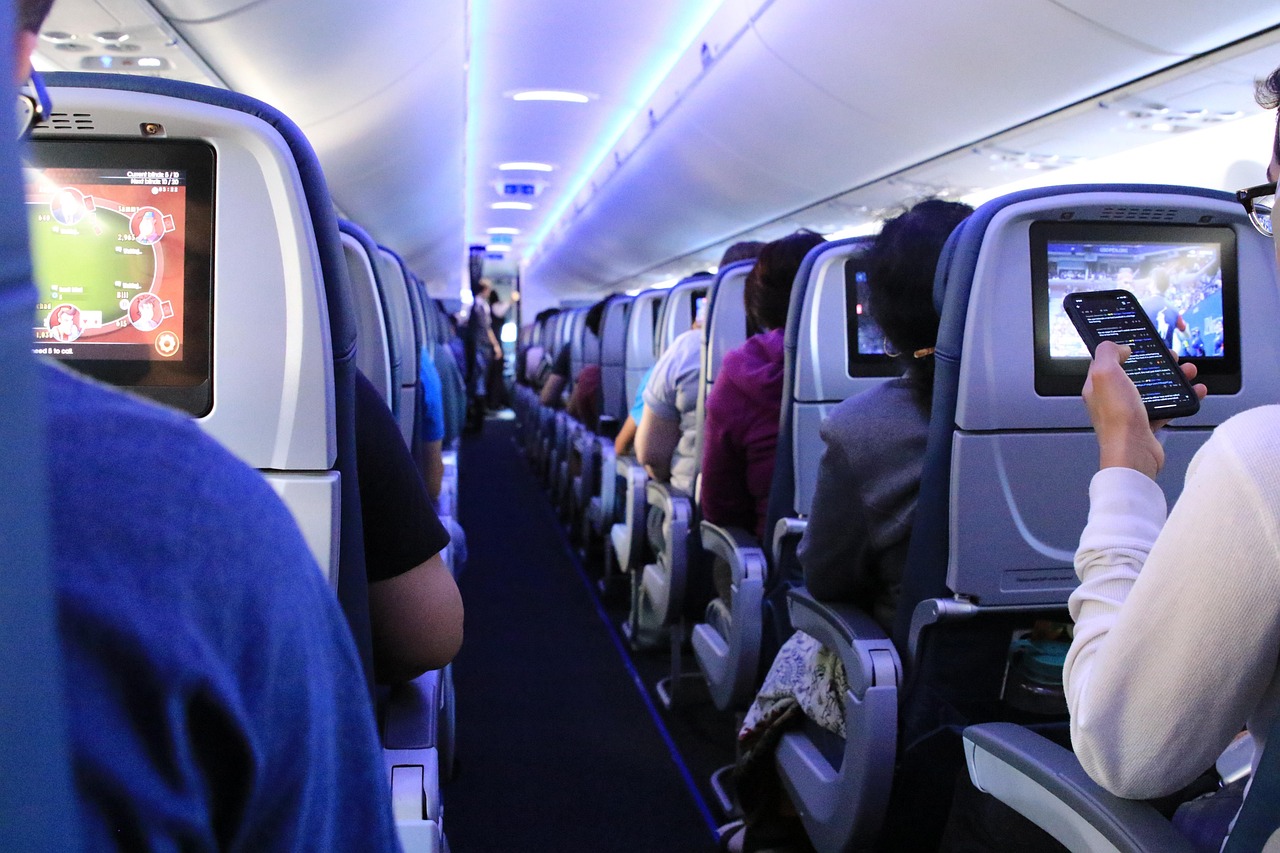
There are often a few things we can enjoy to pass the time while crossing the world at sub-sonic speeds over 30,000 feet above sea level on a commercial airliner. On the long flights, after enjoying a meal and drinks we then decide what we want to do for the rest of the time. Some will take a short nap or just go to sleep, or read a book or magazine. Those sitting on the window seats can enjoy the outside views. Then there is the option to watch a movie, or listen to music on the seatback screen or our own device.
Since the first commercial flights, keeping passengers occupied while inflight has been a question airline operators have asked themselves. One answer has been to provide audio and video systems – referred to as Inflight Entertainment (IFE) - to provide content such as movies and music to enjoy while onboard. Today, these systems have been advanced to allow passengers to go beyond movies and music to play video games, see outside views of the aircraft, or get the flight status and connecting flight information on their own seat. IFE systems have come a long way from the early projection screens to show the very first inflight movies, to the vast content libraries available on HD seatback screens today.
“Howdy Chicago”
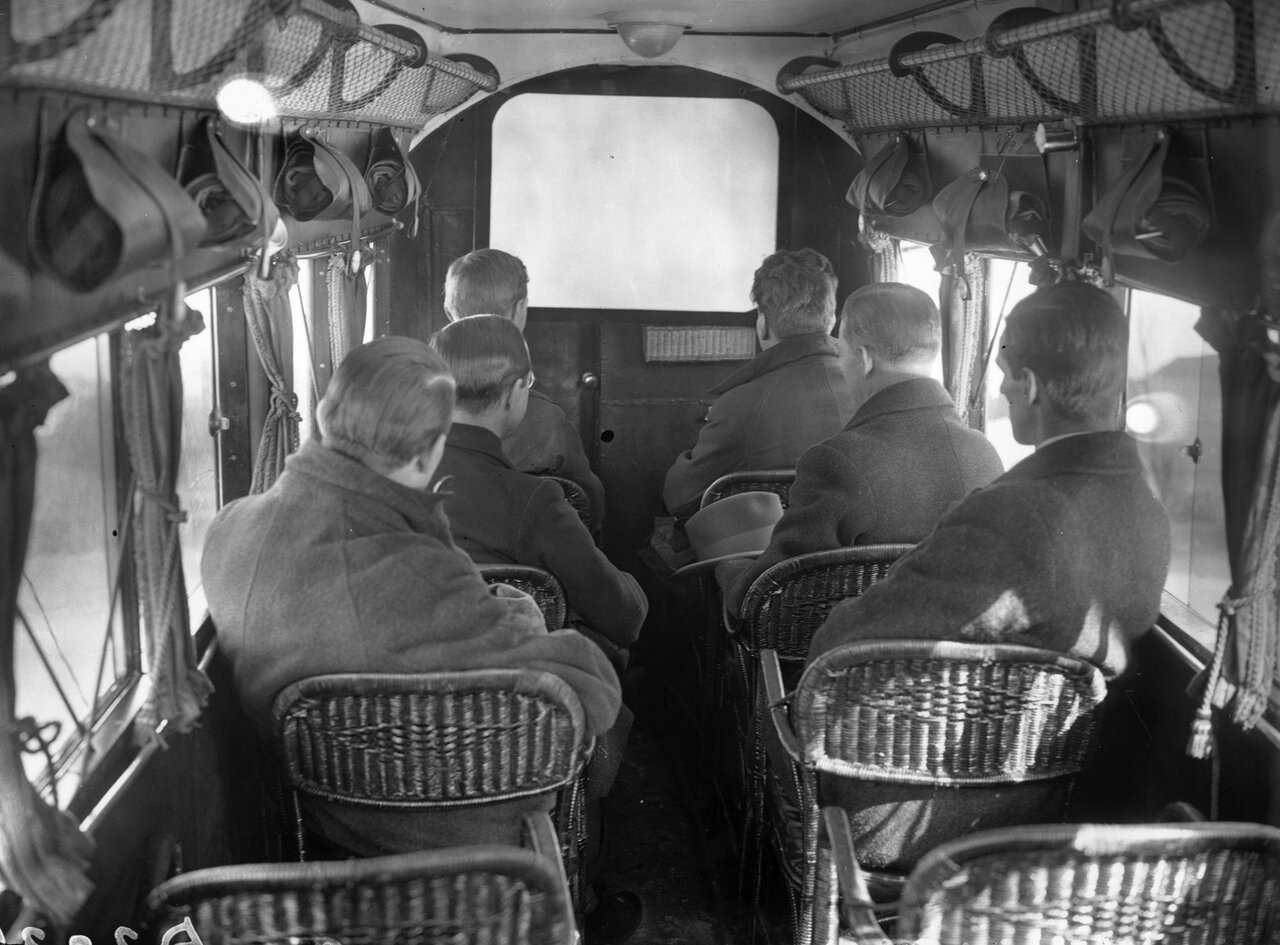
Far from the modern IFE systems we can enjoy today, the very first inflight video was shown on a short flight over the skies of Chicago in the early 1920s. In the August 22, 1921 issue of Aerial Age magazine, “history's first aerial movie show” took place aboard an 11-seat Felixstow F.5 flying boat named the Santa Maria as part of Chicago's Pageant of Progress trade show. The short film shown was a local production to promote the city named "Howdy Chicago."
Image: Showing of the first film on an airplane during Chicago's Pageant of Progress Fair 1921 (Aerial Age/from paleofuture.org)
According to the account on Aerial Age, the film was shown on the plane while flying 90 miles per hour, 2000 feet above the city of Chicago. A DeVry suit-case projection machine was fastened in position and connected with an electric light socket. The film was viewed on a projection screen towards the front of the cabin, and it was switched on by a projectionist.
This was the first known experiment in showing a film onboard an aircraft. Though the technology of the time was limited, it was described as a success. An account from the article said: “Before the flight it was feared that the vibration of the giant hydroplane as it shot through at 90 miles an hour would seriously interfere with the screening. But it did not. This historic flight demonstrated the practicability of movie entertainment for transatlantic aerial commuters in the days to come.”
The success of the film screening on the promotional flights around Chicago opened up ideas for those in aviation on how to show films onboard. This would lead to the very first feature length movie being shown a few years later by Imperial Airways – a predecessor to British Airways – on April 6, 1925. The very first movie shown on an airplane - “The Lost World” - was promoted by Imperial Airways with its flights as being the “World's First Aircraft Cinema.”
Images: Imperial Airways first film showings in the 1920s (Getty Images)
Following the first movie showings aboard the Imperial Airways flights, airlines would experiment using radio signals from the ground for live broadcasts and performances from singers.
By the 1960s, jet aircraft flew faster, higher, and for longer distances than the previous generation of planes. The aviation industry had to address some challenges to show movies on planes such as getting reels onboard. The other big challenge was to find a projector that could withstand turbulence yet be light enough not to add exra weight to an aircraft. These challenges would be solved by a cinema owner named David Flexer. Flexer would start a company named Inflight Motion Pictures – a company that would lead the rise of regular film showings on flights, but also was the foundation for IFE systems that the aviation industry would improve on after.
After an investment of USD $1 million, Flexer and his company would develop a 16mm film system with a 25-inch reel mounted horizontally to maximize space. Passengers would view the film on a projector at the front of the cabin. Using the new system, Trans World Airways (TWA), showed the movie “By Love Possessed” to First Class passengers onboard a Boeing 707 in 1961. TWA's main rival Pan American (Pan Am) would then follow to offer film showings onboard. A year later, Pakistan International Airlines (PIA) became the first international airline to introduce inflight movies with the same new system.
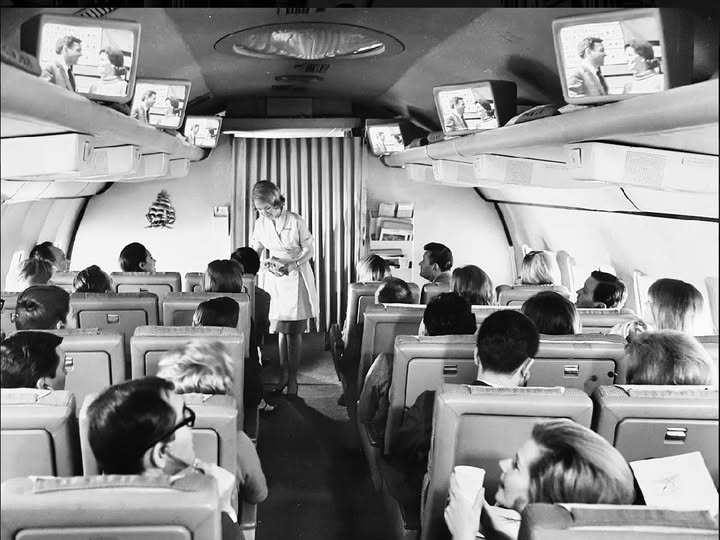
Images: Early IFE aboard Pan American aircraft 1960s and 1970s (panam.org)
The ability to show films onboard aircraft presented an opportunity for airlines to show another type of film before take-off – inflight safety videos. Provided the aircraft had the required video and sound systems, the US Federal Aviation Administration (FAA) from 1984 allowed for these pre-recorded videos to be shown replacing the standard live demonstration performed by flight attendants. Airlines such as Trans World Airways, Pan Am, and Northwest began showing their own inflight safety videos to passengers using the onboard screens.
From Six to 6,500 Channels
The aviation industry would continue to experiment with the new media technologies that were introduced into the 1970s and 1980s such as video tapes, close circuit television, and overhead screens. Though one airline - Northwest Airlines - would make inflight entertainment become more personal with the introduction of individual seatback screens in the late 1980s.
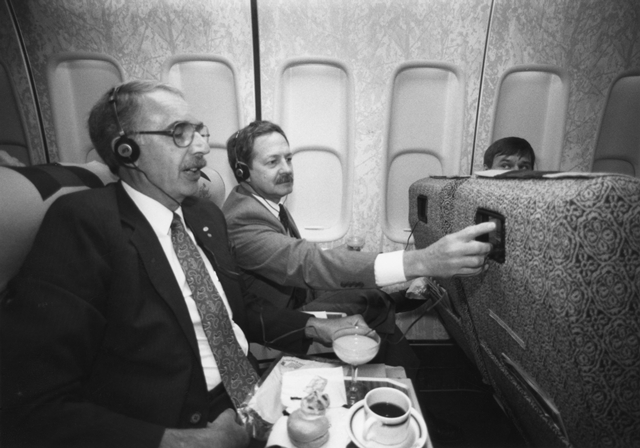
Arn Steventon – a businessman involved in aviation components – wanted to put a small liquid crystal display (LCD) TV screen for each airplane seat. This would lead to the founding of a new company Airvision, and the company would partner with Philips for the screens. Warner Brothers would provide the content for this new IFE system. In June 1988, Northwest Airlines began trials using the new IFE system on its flights between Detroit and Tokyo.
Image: Airvision IFE aboard a Northwest Airlines 747 in 1988 (Northwest Airlines History Center)
Airvision's IFE was the world's first with personal IFE screens. The Boeing 747 on Northwest's Detroit-Tokyo flights had 116 of the 6.9cm seatback screens installed, on which passengers could watch video content on six channels. The six channels showed movies, news, documentaries, music videos, and cartoons on a fixed schedule. Both Northwest and Warner Brothers surveyed the passengers, and the result was 70% preferred the personal screens to the overhead screens. Following Northwest, British Airways and Qantas would launch their own trials of Airvisions IFE system on board their aircraft.
From six channels offered on the Northwest Airlines 747s, these IFE systems would expand with far bigger libraries and seatback screens going beyond movies and music to offer passengers the ability to play video games, listen to podcasts, watch Live TV, see the inflight map, and even communicate with their fellow passengers. Among the biggest libraries of content that airline passengers can enjoy today comes from Emirates' ICE system. Widely regarded as the world's largest with 6,500 channels of Audio-Video on Demand (AVOD) content, Emirates has one of the well regarded airline IFE systems that also include Qatar Airways Oryx, Singapore Airlines' KrisWorld, and Cathay Pacific's system.
Image: Emirates ICE screen homepage on seatback screens (Emirates)
Of the AVOD IFE systems today, Singapore Airlines' KrisWorld is widely regarded as the first to allow for passengers to pause, rewind, and fast forward movies or music. After launching KrisWorld in April 1995 with 32 audio and video channels and 10 video games, it launched a new system called Wisemen 3000 in September 1997. First introduced to First and Business passengers, it was then rolled out to Economy Class passengers in 2001. In addition to the media control options, news text displays and destination information were also provided.
Prior to Singapore Airlines' Wisemen 3000, Swissair had launched its own AVOD system earlier in the year with its own system powered by Interactive Flight Technologies (IFT). Similar to Wisemen 3000, it also let passengers watch pay-per-view movies and take gaming on airplane to another level with inflight gambling. However, that system was cited as a factor in the crash of Swissair Flight 111. Prior to the crash, Swissair complained the electric boxes under the seat would get too warm and hard drives inside failed regularly. Following the crash, Swissair removed the IFT system from aircraft with them and it was never used again.
“Bring Your Own Device”
Image: Pixabay
Well into the 2000s and the rise of the internet, airlines – including budget airlines – have expanded to streaming the very same content on their IFE systems beyond a seatback screen but rather onto the passenger's very own device. This has led to the rise of the “Bring Your Own Device” model for providing inflight entertainment.
Airlines now make decisions on whether to install seatback entertainment screens, or skip it in favor of providing Wi-Fi and content through passengers' own devices. To install modern seatback screens, the cost can vary depending on the aircraft – whether its a small narrowbody jet or a widebody such as the A380. A typical individual seatback installation can cost between USD $10,000-$15,000 per seat. Along with the installation of wiring, servers, the power systems, in-seat controls, airlines also have to invest heavily in both the hardware and software, along with maintenance after installation. Those costs can be far higher than offering a Wi-Fi system minus the seatback screens. Adopting the “Bring Your Own Device” model, airlines – especially budget airlines - can focus on modifying the seats to offer maybe a device holder and charging ports.
With these choices, airlines may have fleets with mixed entertainment systems.Their narrowbody jets used on short-haul flights may have just BYOD systems, while widebody jets used on medium and long-haul flights featuring both Wi-Fi and a seatback screen. Whether aircraft are equipped with seatback screens or not, more aircraft now feature seatback charging ports as passengers increasingly bring and use their own devices onboard. Passengers can also use their own audio devices such as Bluetooth-enabled earphones to enjoy the content.
Compared to IFE systems of the past, modern seatback and wireless systems also provide passengers more flight information. Passengers can view the current flight status information and the exact location of the aircraft on interactive maps. External cameras installed on select aircraft such as the Airbus A380, A350, and 777 - intended for pilots to navigate on the ground – allows for passengers to see views they normally won't get especially during take-off and landing. In addition to getting the estimated arrival time, passengers can also access connecting flight information, and airport terminal maps at key airline hubs through the same IFE systems.
While some aircraft lets passengers enjoy external views through the IFE, one airline has allowed passengers to listen to the conversations between the pilots and Air Traffic Controllers – United via Channel 9. There is no official history of Channel 9 and it is not really mentioned by the airline, though it history goes back to the 1980s. Videos on YouTube do feature passengers listening to the pilot-ATC conversations, but onboard the pilot in command has the final decision whether passengers can listen in. Today, it can be found on United's seatback screens listed as “From the Flight Deck.”
Inflight Wi-Fi Opens More Experiences
In recent years, there has been an increased interest from airlines and the traveling public for inflight Wi-Fi access. On a casual poll on the Flights in Asia X page, when asked which is more important on a flight – having inflight Wi-Fi or an Inflight Entertaiment screen (IFE), over 70% of over 180 people voted for the Wi-Fi. In a larger poll of over 11,000 passengers by Viasat, 81% of those surveyed said “that being able to connect is more important to them.”
Among the headline internet providers has been SpaceX's Starlink, which has seen a growing list of major airlines selecting Starlink to provide free high-speed inflight internet access. Starlink is one company that addresses an interest from passengers and airline for great internet onboard flights, which the 2023 Viasat survey also reported 48% of passengers want the reassurance of free and reliable internet onboard an aircraft. Having this feature is important and will influence booking decisions, as 83% of respondents in the Viasat survey said they would select the same airline if they offered a quality Wi-Fi experience. With more surveys showing similar sentiments and a growing number of airlines introducing FREE onboard internet, it is becoming clear: having free, high-speed internet access is becoming an important factor when selecting which airline to fly with.
Going forward, the basic amenities most airlines will offer to each passenger will be free internet access and charging ports. Budget airlines and those with aircraft operating shorter flights will likely take the route of “Bring Your Own Device,” while bigger full-service carriers may choose a hybrid model that allows connections between passengers' devices and the seatback screen. Regardless, there are opportunities for budget and Full-service carriers to incorporate personal greetings and allow passengers to enhance their inflight experience by using it for meal orders, showing food and beverage options, reading materials, or communicating with the flight attendants. Airlines could further experiment with technologies such as VR/AR, but the success of those technologies will depend on the ability for passengers to enjoy those activities in the limited space on the plane – even in the premium seats – and the needed equipment can be safely installed on an aircraft.
Modern IFEs have come a long way from the simple projector showing “Howdy Chicago.” We now have more options when it comes to the types of content and games to keep us occupied as airlines push the boundaries of flight. We are no longer just limited to a personal screen, but can enjoy and control the same content and connect to the internet on our own devices. With the internet, IFE systems expanded what can be enjoyed in a flight beyond the seatback screen.
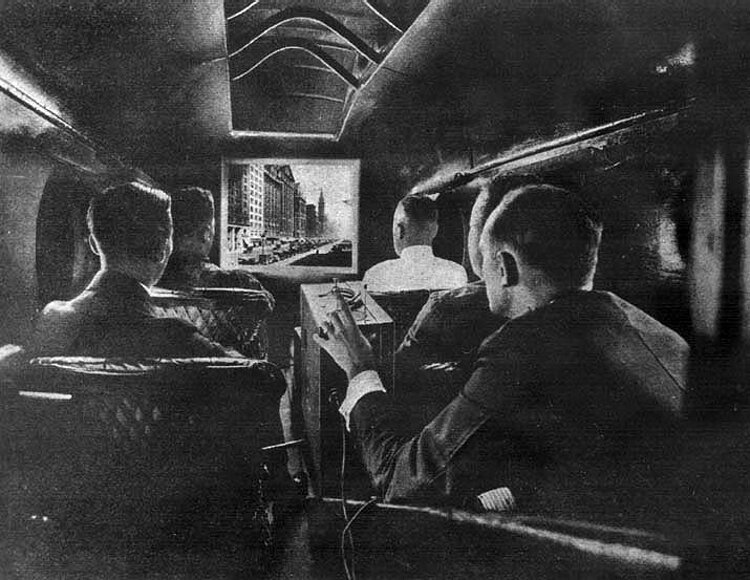 Image: Showing of the first film on an airplane during Chicago's Pageant of Progress Fair 1921 (Aerial Age/from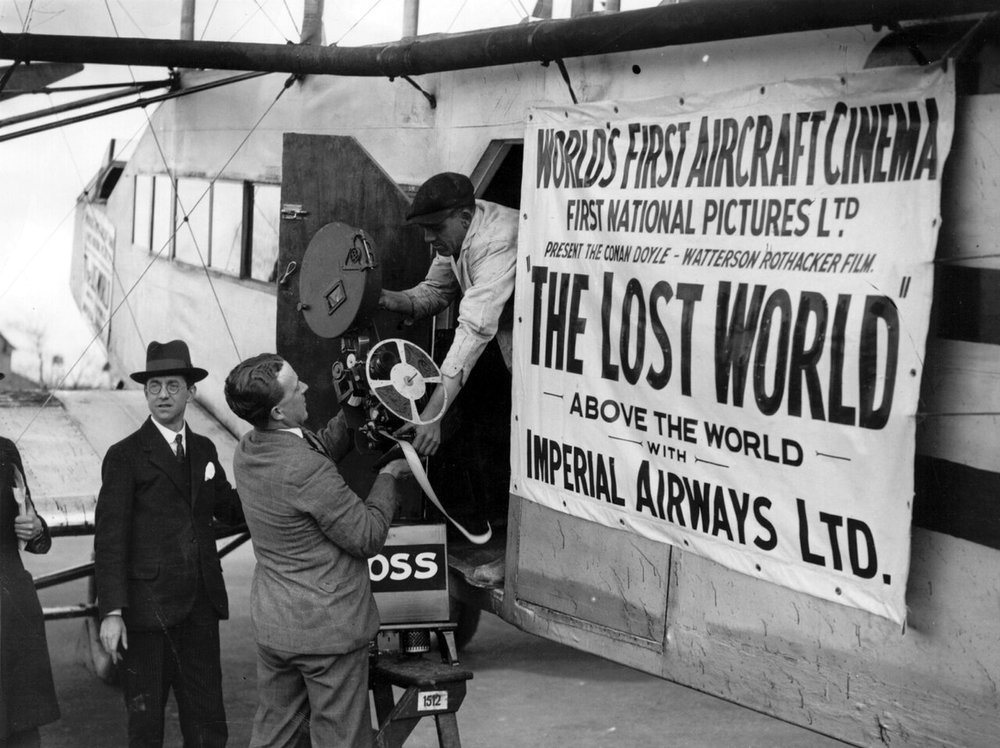
.png)
.jpg)