Watch on YouTube
Despite the early setbacks due to the COVID-19 pandemic following its launch, STARLUX overcome its early challenges to become one of the biggest aviation success stories not just in Asia but globally. Founded by the heir to EVA Air Chang Kuo-Wei, STARLUX has grown its fleet to 30 aircraft operating flights to over 30 destinations in Southeast Asia, Japan, and North America. The Taipei-based airline recently announced plans to launch more routes to Japan, and just started a new route to Phoenix in the US. While growing its network, noticeably absent are any city in the nearby countries of South Korea and China. In the highly competitive air travel market in Northeast Asia, STARLUX faces challenges such as local preferences and geopolitics in the area.
.png)
Image: STARLUX's route map (STARLUX website)
The South Korean Market
On paper, South Korea sounds like a great market for STARLUX to expand into. Both countries share common economic, industrial, and cultural interests such as Korean pop music (K-POP), trade, and tech manufacturing. It is a close hop from home, yet it is a country where STARLUX is absent.
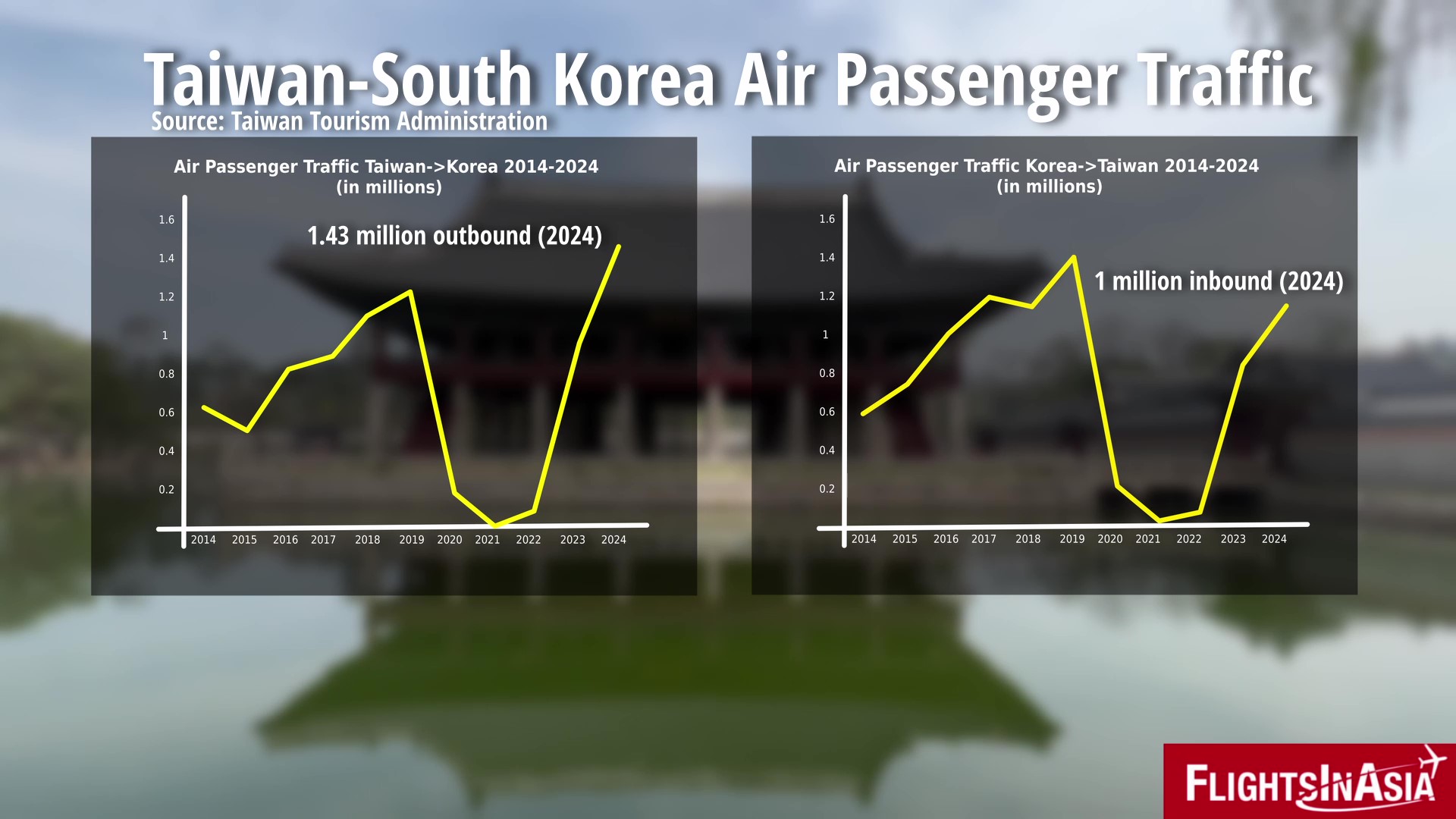
While the number of visitor arrivals going between Taiwan and South Korea has recovered following the pandemic, it is a highly competitive short-haul market served by multiple full-service and budget carriers from both countries. STARLUX could market its premium products though it has been known that Koreans have a preference for their own companies. This usually shows up when traveling, as Korean business and premium travelers typically prefer flying with Korean Air and/or Asiana Airlines.
STARLUX can try to offer connections to destinations within its own network in Southeast Asia from Korea. Though the same levels of competition – especially from budget airlines offering direct flights to popular regional destinations in Thailand, the Philippines, and Vietnam – are hard to beat. STARLUX also does not have destinations south and east of Singapore and Jakarta which the Korean carriers do not serve. As Korean Air and Asiana uses widebody jets to these destinations with their own premium products, it is a tough sell for a younger airline like STARLUX with fewer aircraft and a smaller network.
Lack of Recovery of the China-Taiwan Market
STARLUX currently operates flights to China's Special Administrative Regions of Macao and Hong Kong, but currently has no flights to any major city in Mainland China – including Beijing and Shanghai. While relations between the two countries has been centered on whether Taiwan is a part of China or not, each day airlines offer multiple flights crossing the straits. Like South Korea, China is another market which is close yet fiercely competitive from Taiwan.
Despite the many flights operated each day between Mainland Chinese cities and Taiwan, the Taiwan-China market has not fully recovered after the pandemic. According to data from Taiwan's Tourism Administration, the visitor departures from Taiwan to China has recovered following the pandemic to over 2.7 million in 2024. However, it is below the peak of over 4.1 million set in 2018. The situation is worse for inbound Chinese visitor arrivals into Taiwan falling to around 438,000 in 2024.
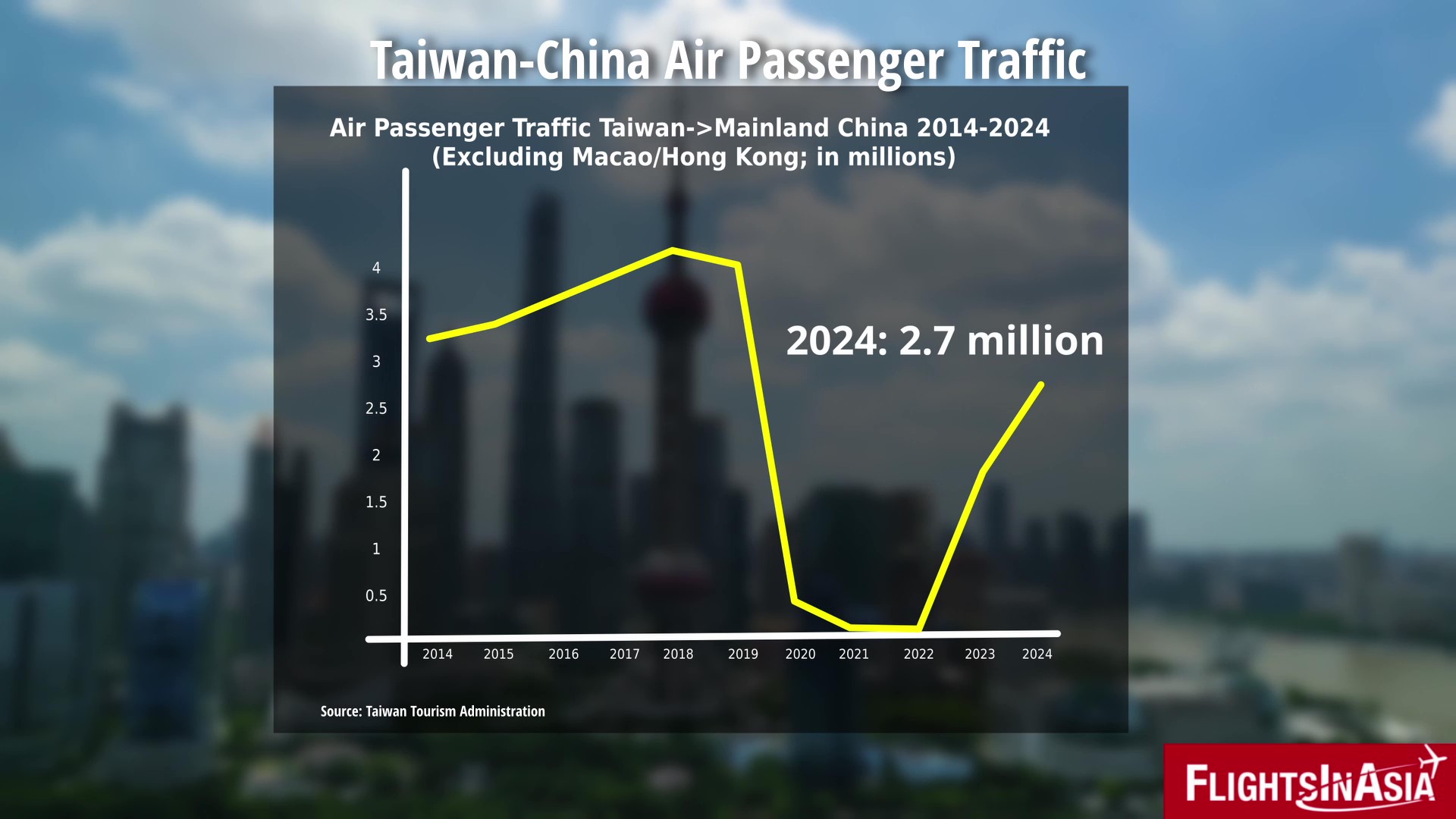
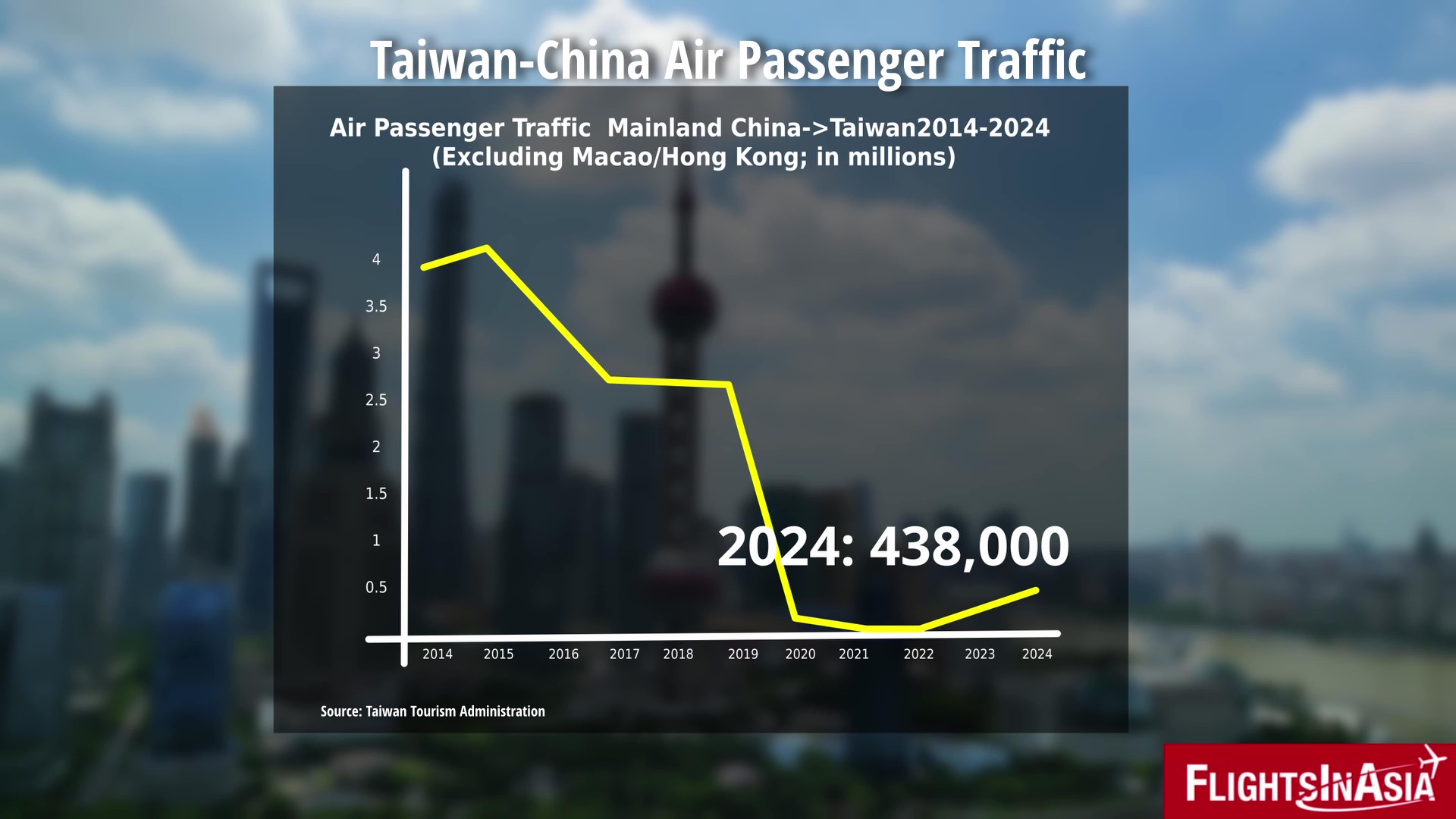
Between Mainland China and Taiwan, among the airlines operating are Chinese airlines backed by their government. Combined with the numerous airlines offering flights on a market with weaker passenger traffic that has not recovered from their peak, it is another market STARLUX has avoided.
Playing to its Own Plans and Strengths
When Chang Kuo-Wei first revealed his plans for STARLUX, he mentioned that it would be a premium airline, referring to Dubai-based Emirates as an inspiration. Fast forward six years later, STARLUX focuses on high-end travel experiences on its flights to its destinations in Southeast Asia, the 11 current destinations in Japan, and North America. The North America routes, and its orders for widebody A350 aircraft reflects STARLUX's ambitions for long-haul to other regions such as Europe. Less than a decade since its first flight, STARLUX has managed to carve out a small but growing piece of the market in Taiwan versus the bigger EVA Air and China Airlines.
Featuring destinations in Southeast Asia such as Jakarta, Hanoi, Ho Chi Minh City, Singapore, Kuala Lumpur, and Bangkok, STARLUX provides competing connecting options via Taipei from the region to North America. While there are multiple major regional airlines, other great transit hubs in Tokyo, Seoul, and Hong Kong, and its bigger Taiwanese counterparts, STARLUX markets its premium seats and personal experience as its own unique value proposition versus other airline options.
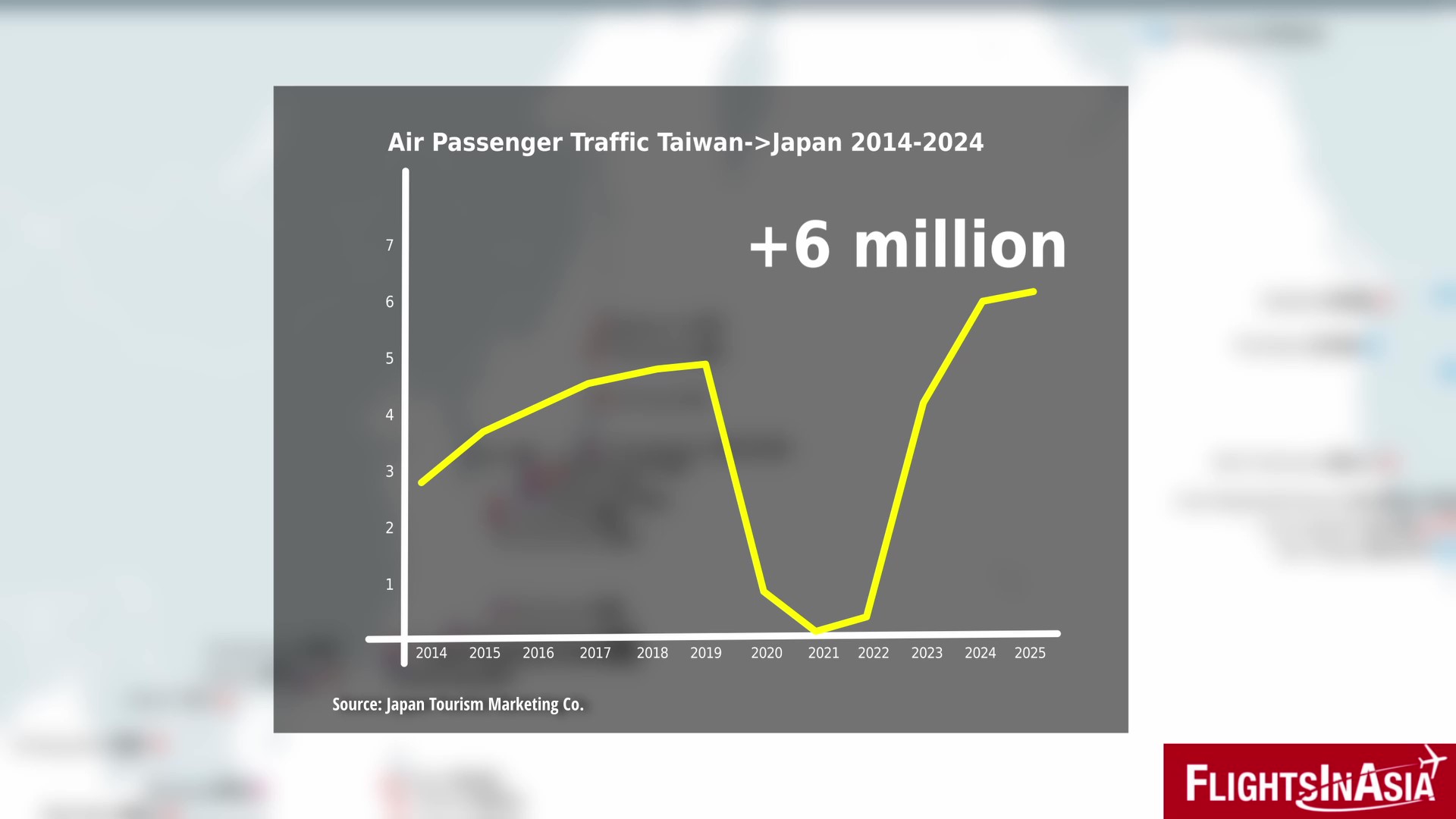
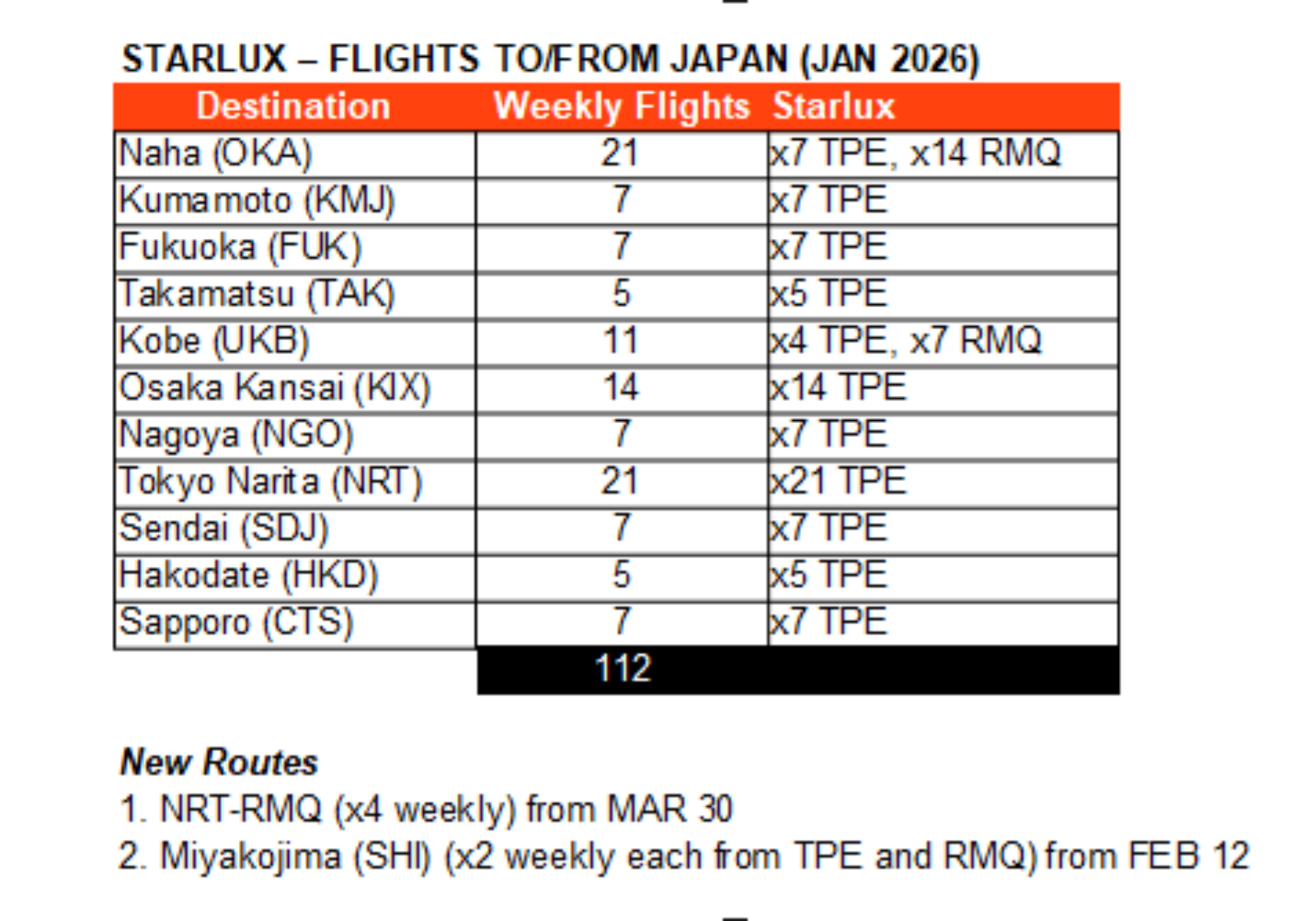
While competing heavily with other full-service and budget carriers on flights to/from Japan, STARLUX operates over 100 flights from Taipei and Taichung to 11 cities Japan. These flights serve the business and leisure market where the number of visitors from Taiwan to Japan has grown to over 6 million in 2024/2025. Despite the inbound Japanese visitor arrivals into Taiwan still recovering following the pandemic, outbound travel to Japan from Taiwan has been the main driver of growth. STARLUX offers flights to major cities in Japan such as Tokyo-Narita, Osaka -Kansai, and Nagoya, along with other secondary cities where it faces less competition such as Sapporo, Sendai, Hakodate, and Takamatsu. The airline is further expanding its presence in Japan with new flights to Miyakojima in the southern Okinawan islands from both Taipei and Taichung starting February 12, a new Taichung-Tokyo route from March 30 followed by Taichung-Kumamoto starting March 31.
As STARLUX grows and expands its fleet, there could be opportunities to add cities such as Seoul, Beijing, and Shanghai in the future. The airline will need more time to gain familiarity with the Korean and Chinese markets, and build its marketing up in those countries. Though opportunities can arise for STARLUX to fill some soon-to-be created gaps in South Korea with the Korean Air-Asiana merger. For now, STARLUX is focusing on its biggest market of Japan, further long-haul expansion, and connecting options to Southeast Asia.
Powered by Froala Editor