
Features
Lie-Flat Economy - Why Korean Air flies with empty seats to Guam
Written by Jeffrey Teruel | Published on October 26, 2026
Features
Written by Jeffrey Teruel | Published on October 26, 2026
This article will take a look at how the near-empty flights operating between South Korea and Guam are part of a much bigger problem that Korean Air and Asiana Airlines have to deal with as the two officially become one airline on December 17.
Watch the video version
On November 7, 2025, a Korean Air flight departed Guam for Busan, South Korea on a routine flight that typical would serve Korean visitors to the US Pacific island territory in the Western Pacific. Though out of the 180 seats on the aircraft, not including the six crew members including the pilots there were just three passengers onboard. It was not an isolated situation, as it was reported by South Korean transport regulators that some flights between Guam and Korea within the same month took off with no more than 20 passengers on board. Despite the Korean visitor arrivals to Guam not recovering to pre-pandemic levels, Korean Air is still reluctantly operating these flights even if some take-off near-empty. Guam is just one destination where Korean Air and its subsidiaries are required to operate at a set level of seat capacity as part of conditions of the approval for the Korean Air-Asiana Airlines merger.
Conditional Approval for Korean Air-Asiana Airlines Merger
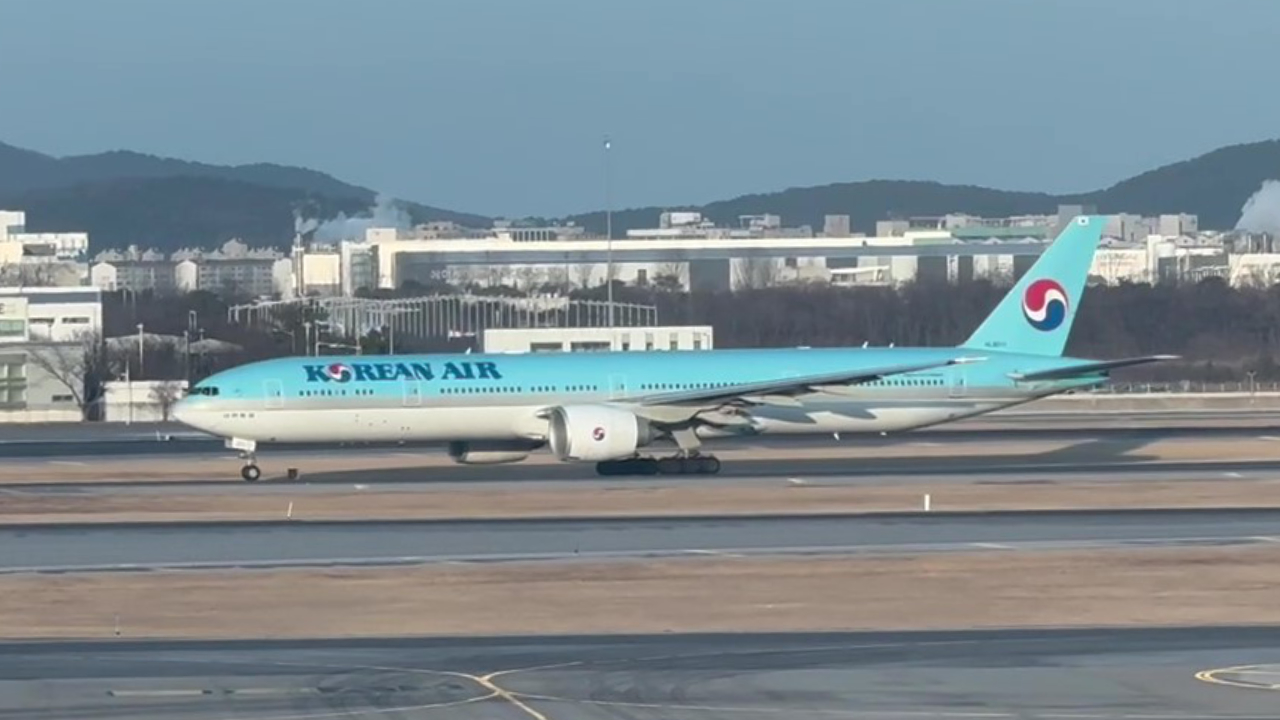
The requirement for Korean Air to maintain a set level of capacity on select routes is part of the conditional approval granted by the Korea Fair Trade Commission (KFTC) for the Korean Air-Asiana merger granted in December 2024. As the unified Korean Air emerges from the merger on December 17, during the long, global approval process it received specific conditions from regulators in South Korea and Europe. In Europe, the airline ceded flight rights to competing airlines on select routes. Within South Korea, the merged carriers were required to maintain 90% of seat capacity based on 2019 levels for 10 years on 40 routes.
KFTC’s goal was to prevent route reductions and fare increases that could come as a result of the merger of the country’s two main airlines. Korean Air could seek changes, and the process would require slot transfers and the transfer of flight rights. Among the destinations that is covered by the seat capacity requirement is Guam.
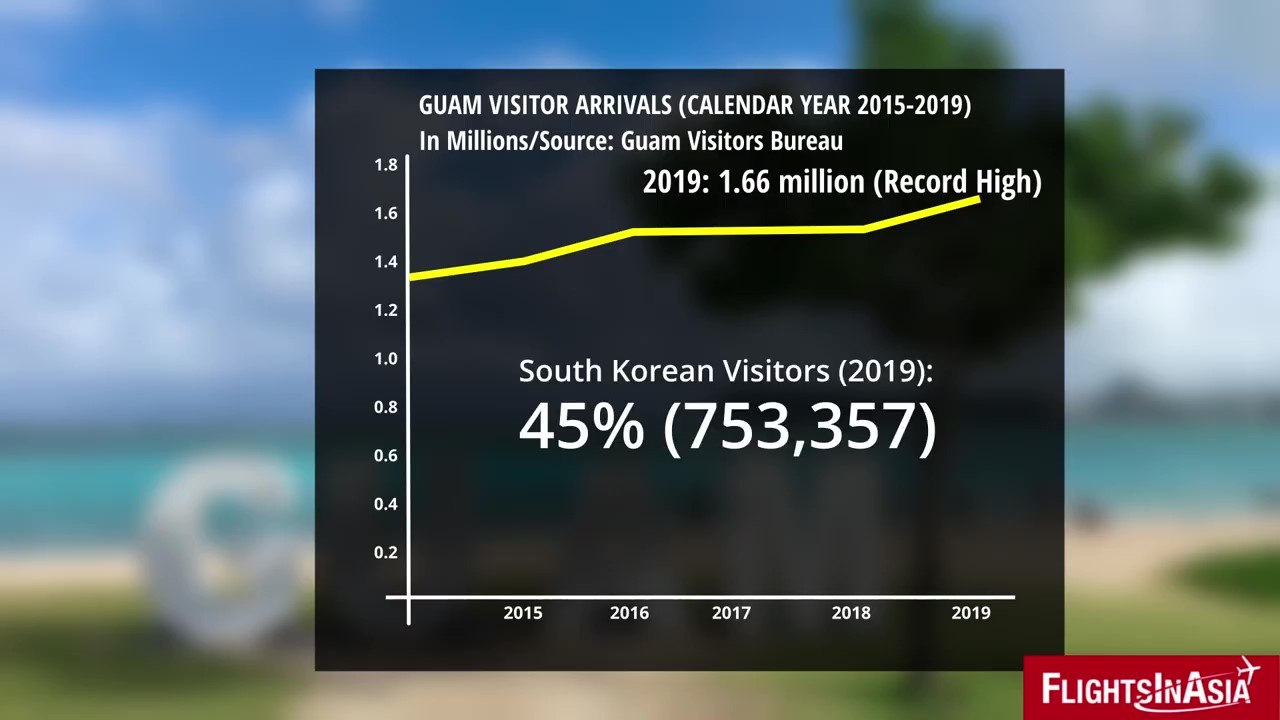
Tourism is Guam’s major industry and South Korea is the island’s largest source of foreign visitors. In 2019, the island recorded a record 1.66 million visitor arrivals during the calendar year (January-December 2019). The majority of around 45% came from South Korea, with the Guam Visitors Bureau (GVB) reported 753,357 Korean visitors to the island that year. Korean Air and its budget subsidiary Jin Air operated flights to Guam primarily from Incheon. They were joined by other budget carriers such as Jeju Air, T’way Air, and Asiana subsidiaries Air Busan and Air Seoul catering to the Korean visitors coming to the island.
The COVID-19 pandemic and travel restrictions would lead to the mass suspension of flight operations worldwide. Heavily reliant on tourism to support its local economy, it was a major economic blow to Guam. Though as travel restrictions were later eased, there was hope on the island that visitor arrivals would recover. As the Korean Air-Asiana merger secured approval from the KFTC in late 2024, the regulator set the capacity requirements that Korean Air would maintain for 10 years on 40 routes based 2019 levels. For Guam, it was based on the peak visitor arrivals and available capacity from Korea.
“Lie-Flat Economy”

Image: Tumon Bay, Guam. Credit: Wikimedia Commons
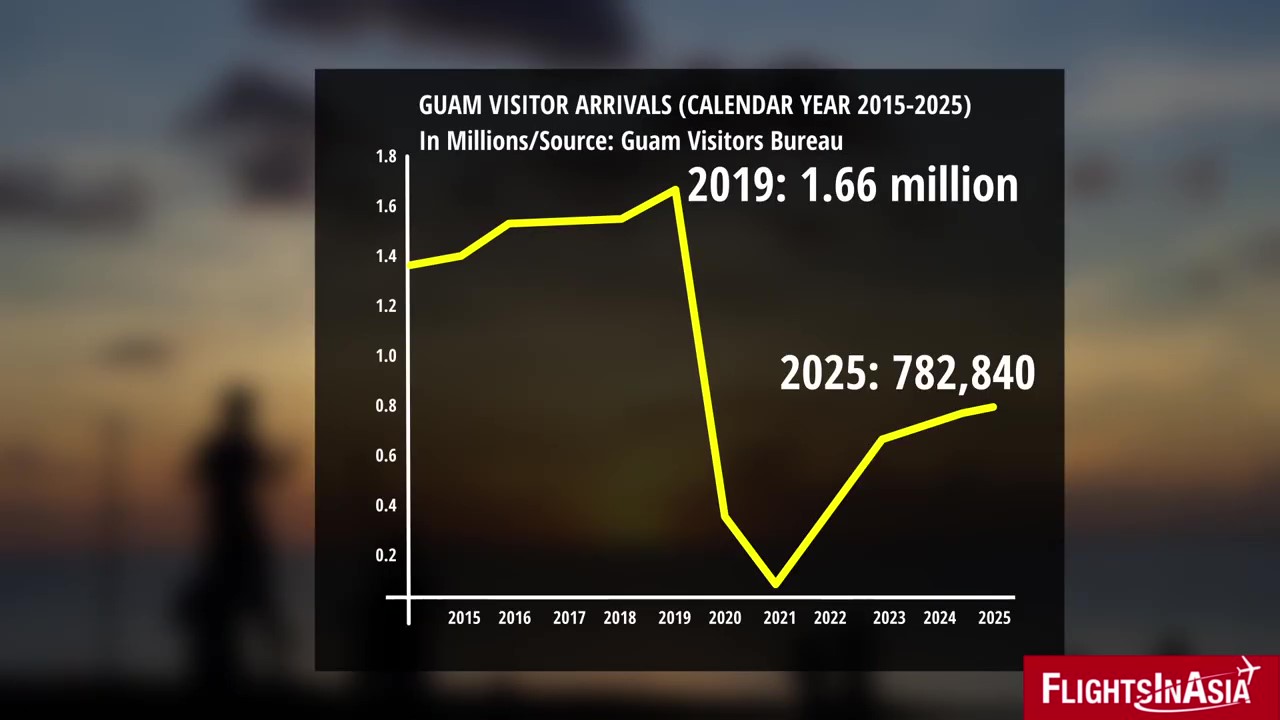
Unfortunately, there has not been an expected recovery for Guam’s tourism industry. Visitor arrivals to the island in 2025 were less than half of the pre-pandemic high in 2019 welcoming a total 782840 visitors last year. While Korean visitors still make up the majority of visitor arrivals to the island, it is also just half of pre-pandemic levels. The struggles of Guam’s tourism industry has been attributed to various factors, such as the weaker Korean Won, better and cheaper destinations elsewhere, and the state of the local tourism infrastructure. While the reasons for the failed recovery are discussed, the demand for travel to Guam from Korea is simply not as strong as before.
Still required to adhere to the seat capacity requirements, Korean Air and the other Korea-based carriers still had to operate the flights. It very much created a situation of oversupply of seats between Guam and South Korea. It was reported by South Korea’s Ministry of Land, Infrastructure, and Transport that the average load factor on the Guam-Busan route during the month of November 2025 was just 10-20%. That number is far below what is considered a good load factor for any airline – Low Cost Carrier (LCC) or Full Service Carrier (FSC) – to break-even on a route.
These weak load factors were highlighted in reports such as the Korean Air flight returning to Busan from Guam on November 7, 2025 carrying just 3 passengers. An earlier Korean Air flight from Busan to Guam on November 1, 2025 had only 4 passengers. The next day (November 2, 2025), another Busan-Guam flight had just 19 passengers. There is an aviation term “lie-flat economy” used to refer these kinds of flights, where since the flight is very much empty you can use the whole row as your own lie-flat bed.
The weak demand between Korea and Guam led to Korean Air reducing its flights between Incheon and Guam between January and July 2025 to 545 flights – 36% less than the same period in 2019. After the Korean regulators took notice, the airline moved to increase seat capacity. Guam tourism officials seek to maintain seat capacity, though it has not produced the results of a tourism recovery from Korea as they have liked.
According to data from Flightradar24, there are around 48 weekly flights between Guam and two destinations in South Korea: Incheon and Busan. There are up to five flights a day operated by Korean Air, Jin Air, and Air Busan from Incheon, with both Korean Air and Jin Air with two each on the busiest air route from the island. Air Busan and Jin Air operates flights from Busan to the island. It is far from the past when the market was also served by T’way Air and Jeju Air. Already facing the challenge of weak travel demand, the Guam Airport fee was increased by nearly 9% as of October 1.
Balancing Prior Commitments and Flexibility
Besides the Korea-Guam routes, the Korean carriers have sought the KFTC to ease the seat capacity requirements, seeking more flexibility to address market changes. In a way it is seen as holding back airlines from launching other, more viable routes. As of the publishing of this article, it has been reported a KFTC examiners report recommended the regulator to reject the airlines’ request to lower the seat requirement to Guam from Incheon and Busan. While the examiners determined the circumstances did not meet the criteria for modifying the requirements, there will be a plenary session for the airlines to state their case directly to the regulator.
The problem goes beyond Guam for the Korean carriers. Another separate case that the KFTC is looking into a domestic route between the central city of Cheongju and the southern resort island of Jeju. A KFTC examiner’s report stated the airline has not adhered to the 90% capacity rule during a 1-year period between December 2024 and December 2025, and recommended action to be taken.
As Korean carriers struggle to maintain capacity amid the weak travel demand to Guam, Guam’s tourism industry officials continue their work to promote the island in major markets especially in South Korea. While its no fault of their own that Guam simply has lost its appeal as a destination for Koreans, the airlines bear the cost of operating the flights which also includes paying for fuel, pilots and crew, and airport fees.
When the conditional approval for the Korean Air-Asiana merger was granted, Korean Air had anticipated the recovery of markets such as between Korea and Guam. The current conditions were agreed upon by Korean Air, though it has been difficult to maintain the pre-pandemic capacity levels on the covered routes. The seat capacity can be regulated, but the very same regulators can not force Koreans to book flights to Guam or other destinations covered by the 90% capacity requirements. Unless the market between Korea and Guam improves before the requirements expire in 2034 or eased before then, some of their routes will continue to be costly operations.
So now the Korean regulators have to make a choice to ease the requirements to allow for flexibility, or to stand firm to enforce the seat capacity requirements. Its decision will heavily impact Korean Air and its ability to respond to air travel market changes in the future.