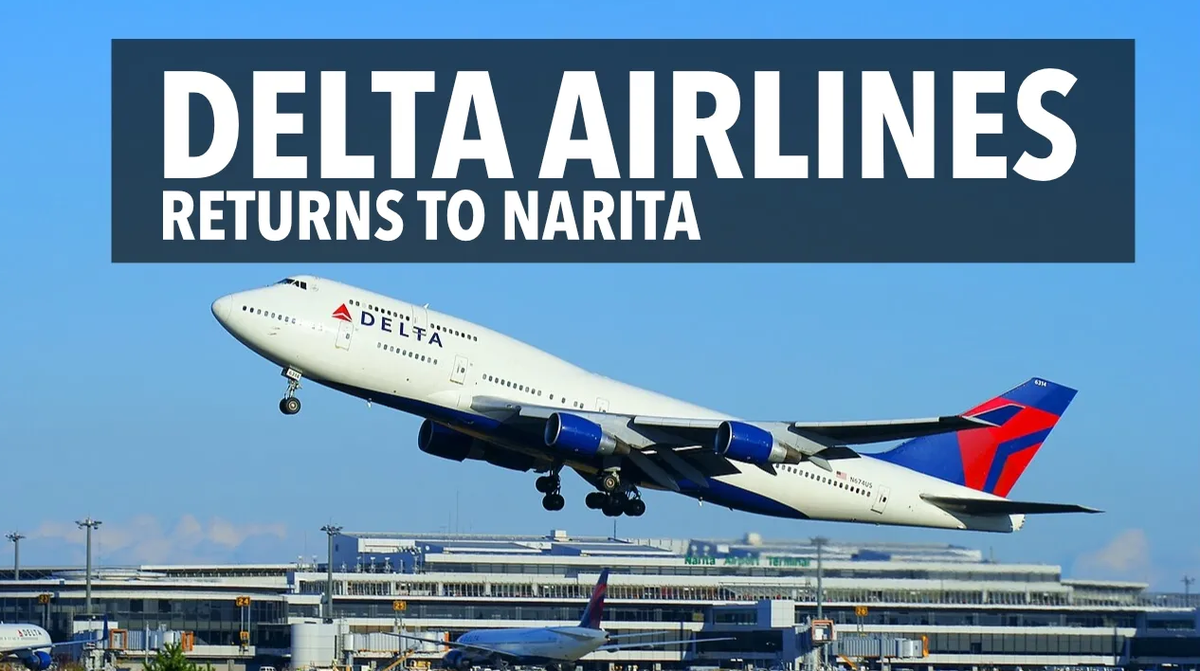
After nearly seven years, Delta Airlines will return to Narita where it once had a major trans-Pacific hub. We'll take a look at the history of Delta's former hub and its presence in Japan.
Watch the Video Version on YouTube.
Towards the end of March 2027, the Narita International Airport just outside of Tokyo will welcome back a familiar airline: Delta Airlines. After a seven year absence, Delta will once again operate daily flights between Seattle and Narita. It is a familiar route that was once part of a major Delta hub operation at the Tokyo-area airport. The Atlanta-based airline is now set to return to Narita Airport which has evolved since its departure as did the Japanese and Asian aviation industries. It is part of a renewed push to strengthen its presence in Asia, looking beyond its long history in Japan.
Seattle-Narita and Delta's Network in Asia
Narita will also become the fifth destination in Asia from Delta’s US Pacific Northwest hub at Seattle. From Seattle, Delta operates flights to Haneda, Seoul Incheon, Taipei Taoyuan, and Shanghai Pudong. When looking at Delta’s overall network, Seattle also happens to be its biggest trans-Pacific hub
The return of Delta at Narita was first revealed by airport operator Narita International Airport Corporation (NAA) on August 7, 2026, before later confirmation from Delta. Using Airbus A330neo aircraft, Delta will operate daily flights between Seattle-Tacoma and Narita starting March 27, 2027. It will be Delta’s second route to Tokyo from Seattle, as the airline currently operates flights between Seattle and the other Tokyo hub Haneda. Between the US and Tokyo, Delta now offers flights on seven routes including the current six from Haneda: Atlanta, Detroit, Minneapolis-St Paul, Seattle, Los Angeles, and Honolulu.
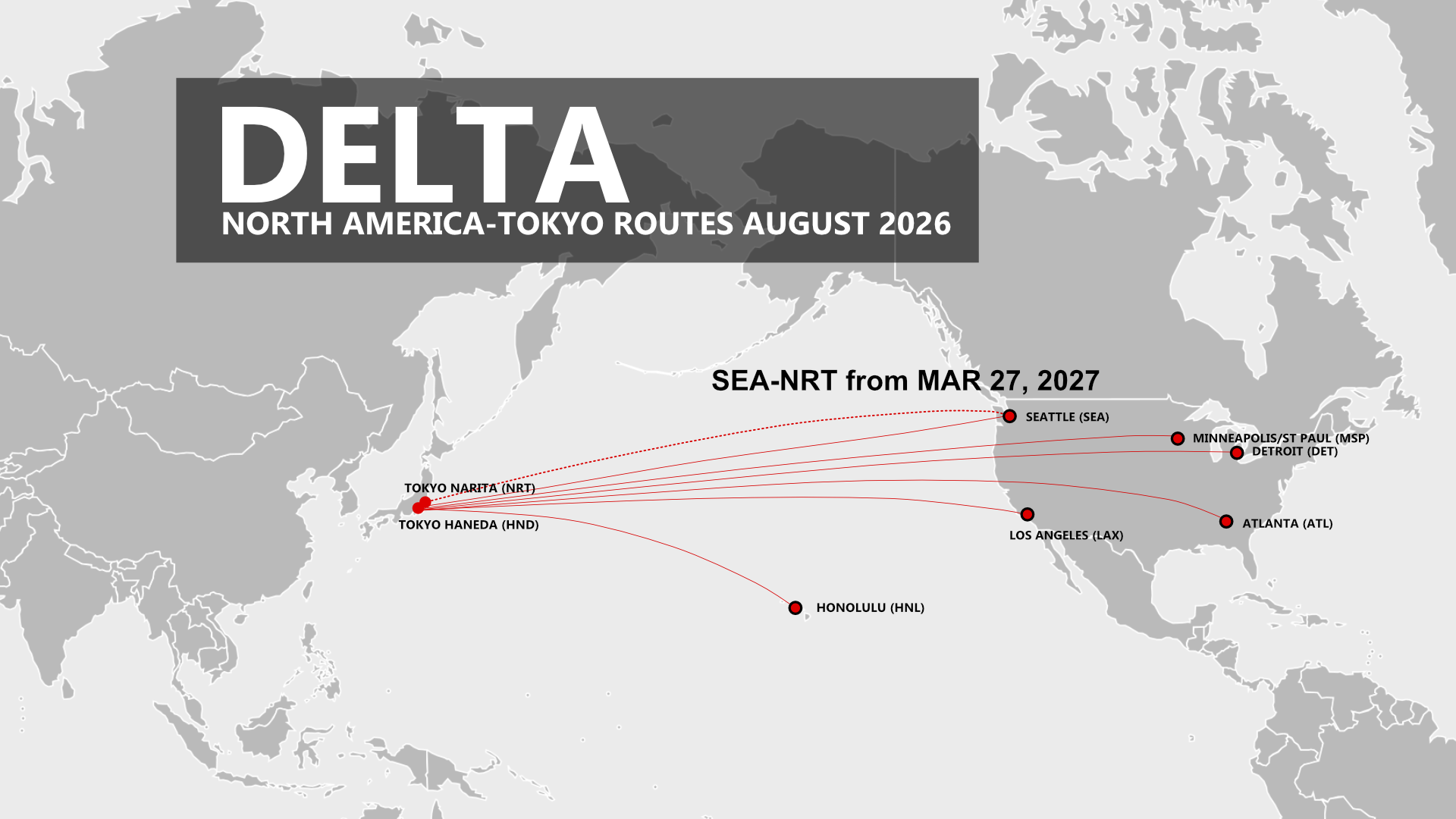
Narita will also become the fifth destination in Asia from Delta’s US Pacific Northwest hub at Seattle. From Seattle, Delta operates flights to Haneda, Seoul Incheon, Taipei Taoyuan, and Shanghai Pudong. When looking at Delta’s overall network, Seattle also happens to be its biggest trans-Pacific hub.
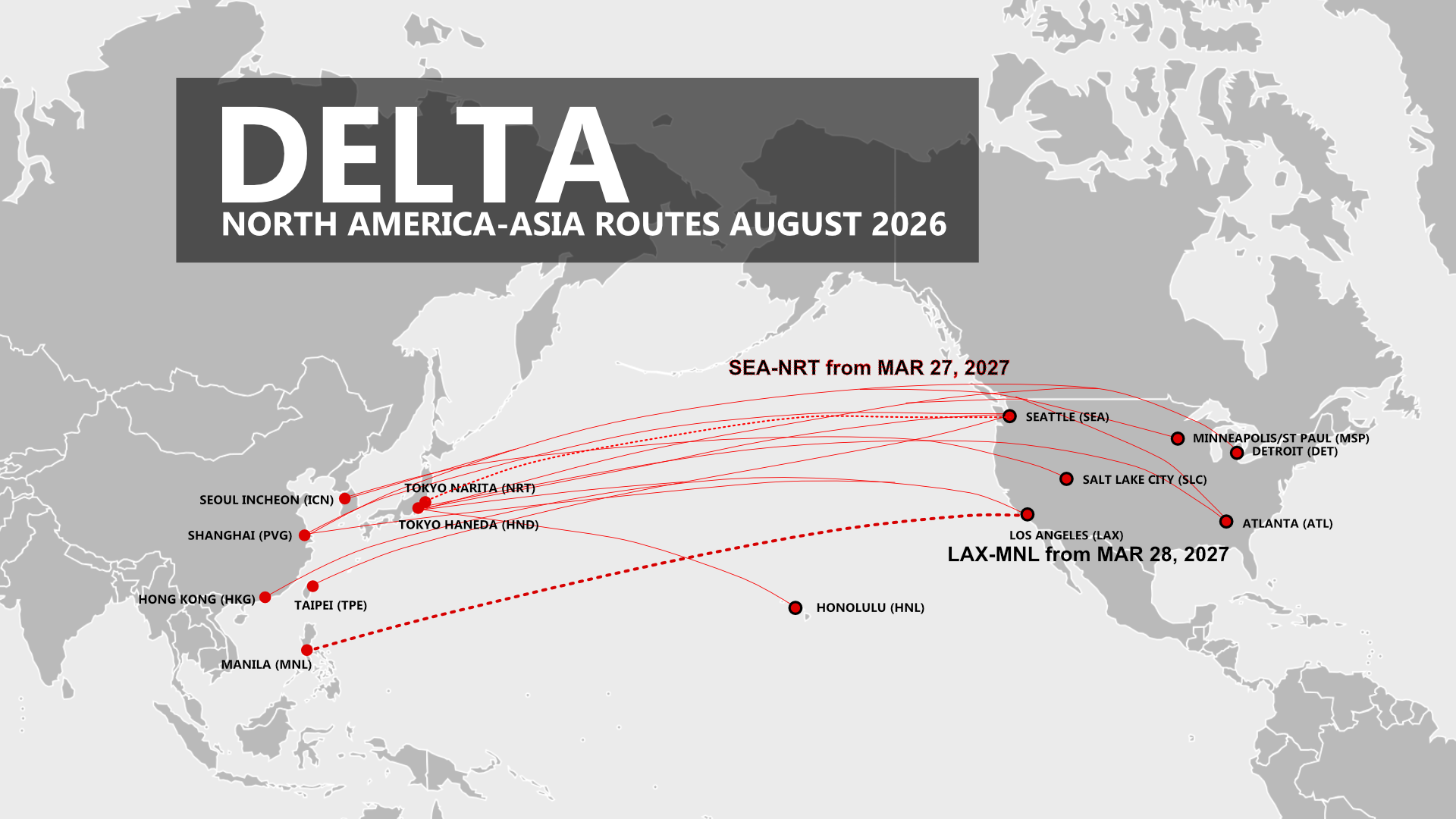
Delta’s overall network in Asia doesn’t extend much more beyond the cities currently served from Seattle. Hong Kong is currently served by a non-stop flight from Los Angeles bringing the total number of destinations in Asia to five. Following the five routes from Haneda, Seoul also has five and Shanghai has three to the US. Taipei and Hong Kong are served with just one route each. Narita will become the sixth destination in the region, and will be followed by Manila when non-stop flights from Los Angeles starts the following day (March 28, 2027).
Destinations such as Manila, Taipei, and Hong Kong were once part of a much larger operation Delta had at Narita until 2020. If you have ever visited Narita during the 1990s to the early 2010s, you probably would have seen a fair amount of Northwest and later Delta Boeing 747s at Narita. With the red tails and later the Delta diamonds, it would have been easy to mistake yourself being at a US mainland hub. The Atlanta-based airline has a long history in Tokyo and Japan spanning more than seven decades.
Northwest Orient to Delta
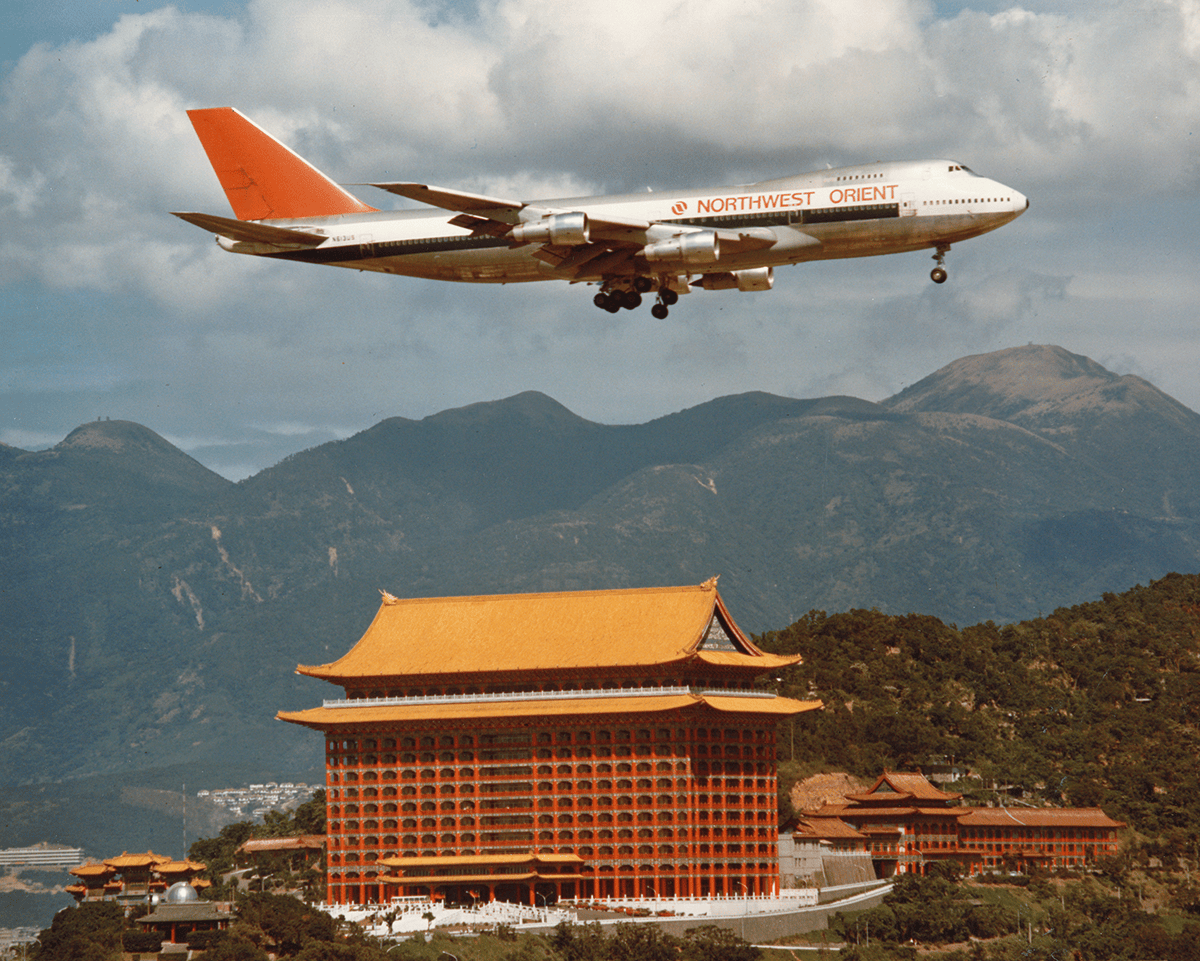
Image: Northwest Orient 747. Image Credit: Delta History Center
Even into the 2010s after the Northwest-Delta merger was done, passengers could fly to Narita from the US hubs such as New York, Los Angeles, Minneapolis-St Paul, and Seattle. Passengers could stay in Tokyo upon arrival, or catch one of the handful of Fifth Freedom flights operated by Northwest to key destinations in Asia such as Manila, Bangkok, Shanghai, Singapore, Hong Kong, Seoul, and Taipei.
Except for a few non-stop flights from the US mainland to Tokyo before the Northwest-Delta merger, most of the history is from the Northwest Airlines side. Before the aviation industry in the US was deregulated in the 1980s, Pan American Airways crossed the Pacific by island hopping through places like Hawaii and Guam to get to Japan, the Philippines, and China. Then there was Northwest that had its start using a northern route to Japan and Asia via Alaska going back to the early 1930s.
Later known as the Great Circle Route, Northwest’s approach to cross the Pacific was to find and use the shortest route between North America and Asia. For this challenge, Northwest turned to a consultant serving the airline who also happened to be one of aviation’s most important pioneers: Charles Lindbergh. Many of us will say Lindbergh’s most famous accomplishment was being the first aviator to cross the Atlantic Ocean, though he would also accomplish another milestone to Asia. In 1931, Lindbergh and his wife would be sponsored by Northwest to fly a Lockheed Model 8 Sirius from New York to Japan via Alaska, landing near the southern city of Fukuoka, before continuing on Nanjing, China. The historic US-Japan-China flight by the Lindberghs became the foundation for Northwest Airlines’ post World War II operations in Japan.
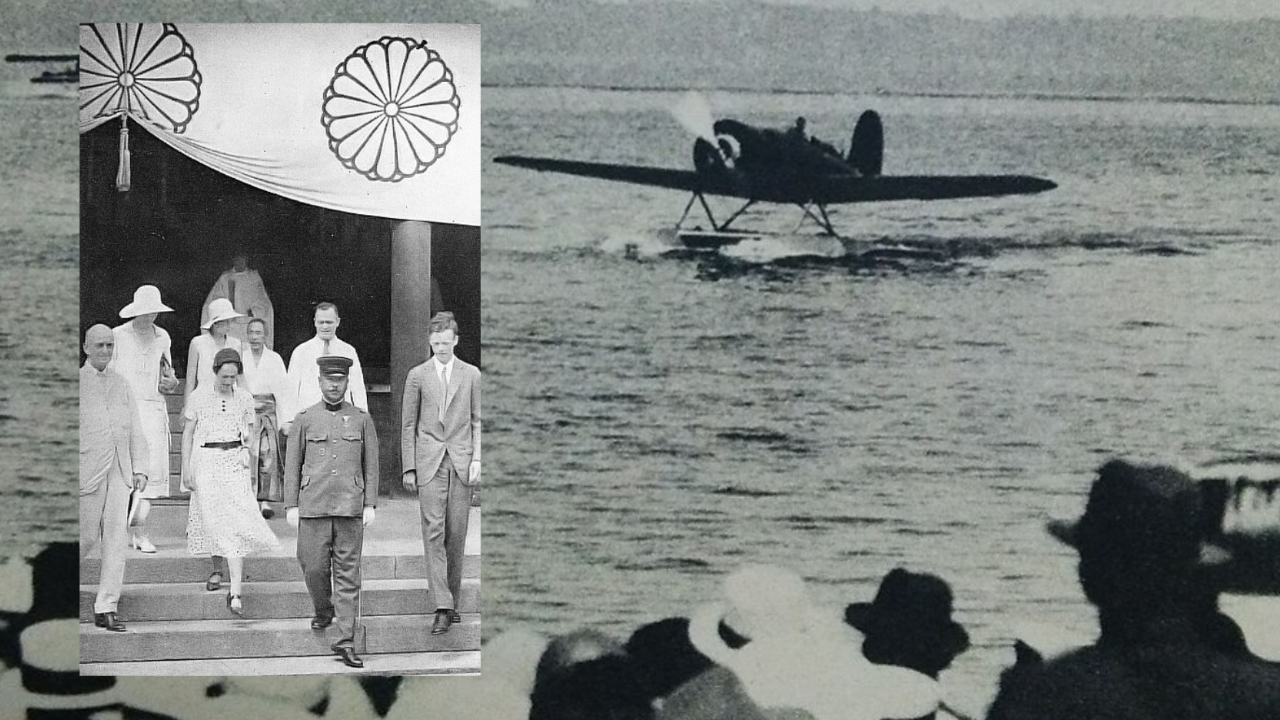
Images: Charles and Anne Lindbergh in Japan. 1931. Source: Wikimedia Commons
Through Lindbergh’s milestone trial flights and later operations supporting US military operations in Alaska, the US government granted flight rights to Northwest for its operations in the Northern Pacific. On July 15, 1947, Northwest’s first flight from the US to Japan took off from the modern day Minneapolis-St Paul Airport heading northwest to Anchorage and Shemya in the Aleutian Islands before arriving at Tokyo Haneda Airport. Following Tokyo, the flight would then continue on to Shanghai and Manila. Northwest would later form a brand named Northwest Orient dedicated for its trans-Pacific flights for nearly four decades between 1947 and 1986.
Tokyo became a major hub for the airline starting at Haneda until 1978 when international flights to from the Japanese capital city was transferred to the then newly opened Narita. Even into the 2010s after the Northwest-Delta merger was done, passengers could fly to Narita from the US hubs such as New York, Los Angeles, Minneapolis-St Paul, and Seattle. Passengers could stay in Tokyo upon arrival, or catch one of the handful of Fifth Freedom flights operated by Northwest to key destinations in Asia such as Manila, Bangkok, Shanghai, Singapore, Hong Kong, Seoul, and Taipei. The airline also served Japanese outbound leisure travel demand to resort Pacific destinations such as Guam, Saipan, Honolulu, and Palau. Trans-Pacific and regional flights were also operated from Osaka and Nagoya.
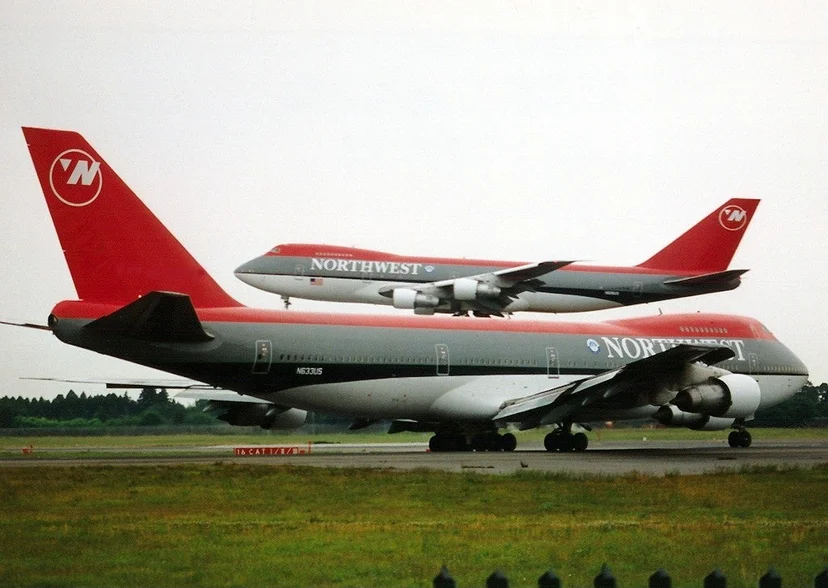
Image: Northwest Airlines 747s at Narita Airport. Source: Wikimedia Commons
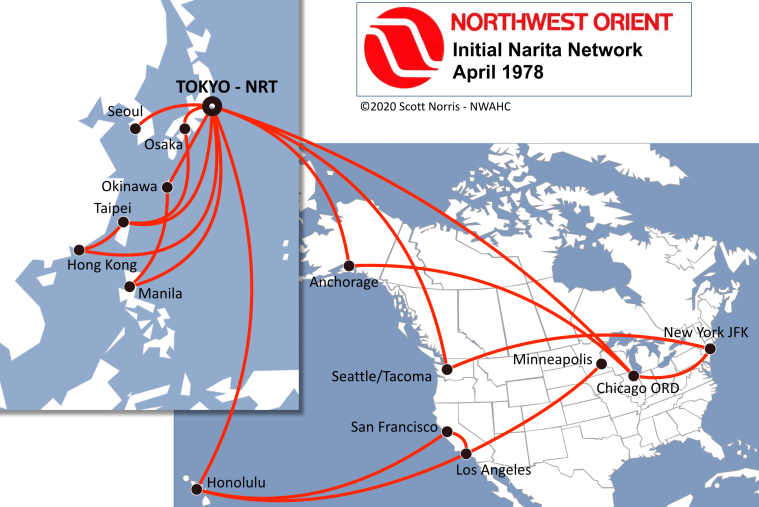
Image: Northwest Orient Network from Tokyo 1978. Credit: Northwest Airlines History Center
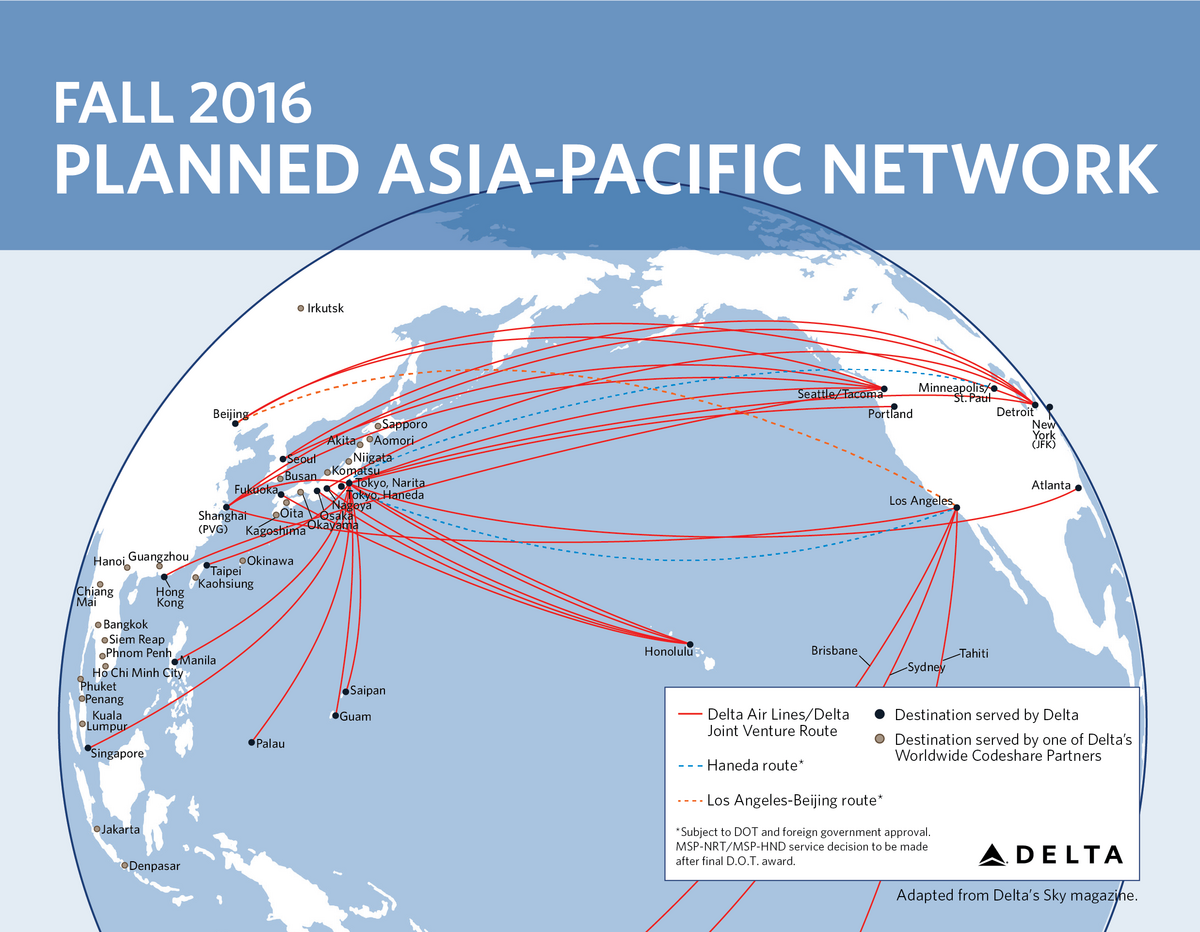
Image: Delta Asia Route Map 2018. Credit: Delta
Looking at the history of the network, one can say Northwest and later Delta was truly a Japanese airline. It was an airline that grew its presence in Japan along with the country’s rise as an economic power after World War II. Terminal 1 at Narita could have easily been mistaken as one of Northwest’s hubs back in the US during the airline’s golden years in Japan during the 1980s and 1990s. Eventually Northwest would become part of Delta Airlines after the two merged in 2008. As a result, Delta inherited the long-standing operations and legacy of Northwest in Japan. Delta’s diamonds would be a common sight at Narita before a gradual decline and eventual exit by 2020.
Sayonara Narita
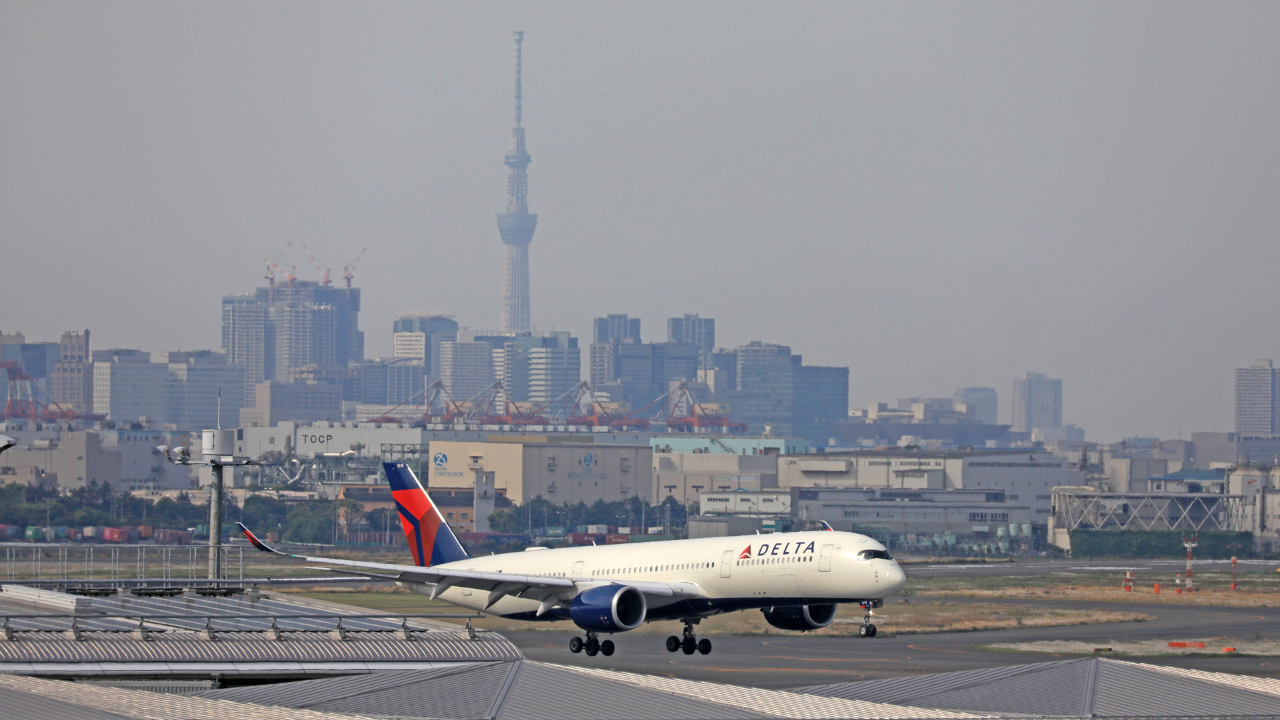
Image: Delta A350 landing at Haneda Airport. Credit: Delta
Delta very much gave up trying to find a partner in Japan and instead turned to South Korea. The airline had a stronger partnership with SkyTeam member Korean Air, which has a significant network of destinations in North America and Asia via Incheon.
While Northwest enjoyed its golden years in Japan in the 1980s and 1990s, the global aviation market was starting to change more rapidly. Modern widebody aircraft capable of flying non-stop for longer distances between continents reduced the need to connect at a secondary hub. Connections across continents were made possible through airline alliances. Budget airlines began to open up more travel options for customers, and they challenged the older legacy airlines for market share. As the global aviation industry was evolving, so too was the situation in Japan.
With its long-standing presence in Japan, Delta was a witness to these changes in the aviation landscape in the Asia-Pacific. While budget airlines from Asia began to challenge the Japanese airlines on routes to Narita, they also started to skip Tokyo altogether with routes from their hubs to other cities in Japan. Though the biggest shift in Japan was the end of the separation of domestic and international flights at the two Tokyo area hubs. Following the completion of Haneda Airport Terminal 3 and a fourth runway, international flights would once again return to Haneda on a limited basis after nearly four decades in 2010. The Japanese government would allocate limited flight slots for non-Japanese airlines from several countries including the US at Haneda.
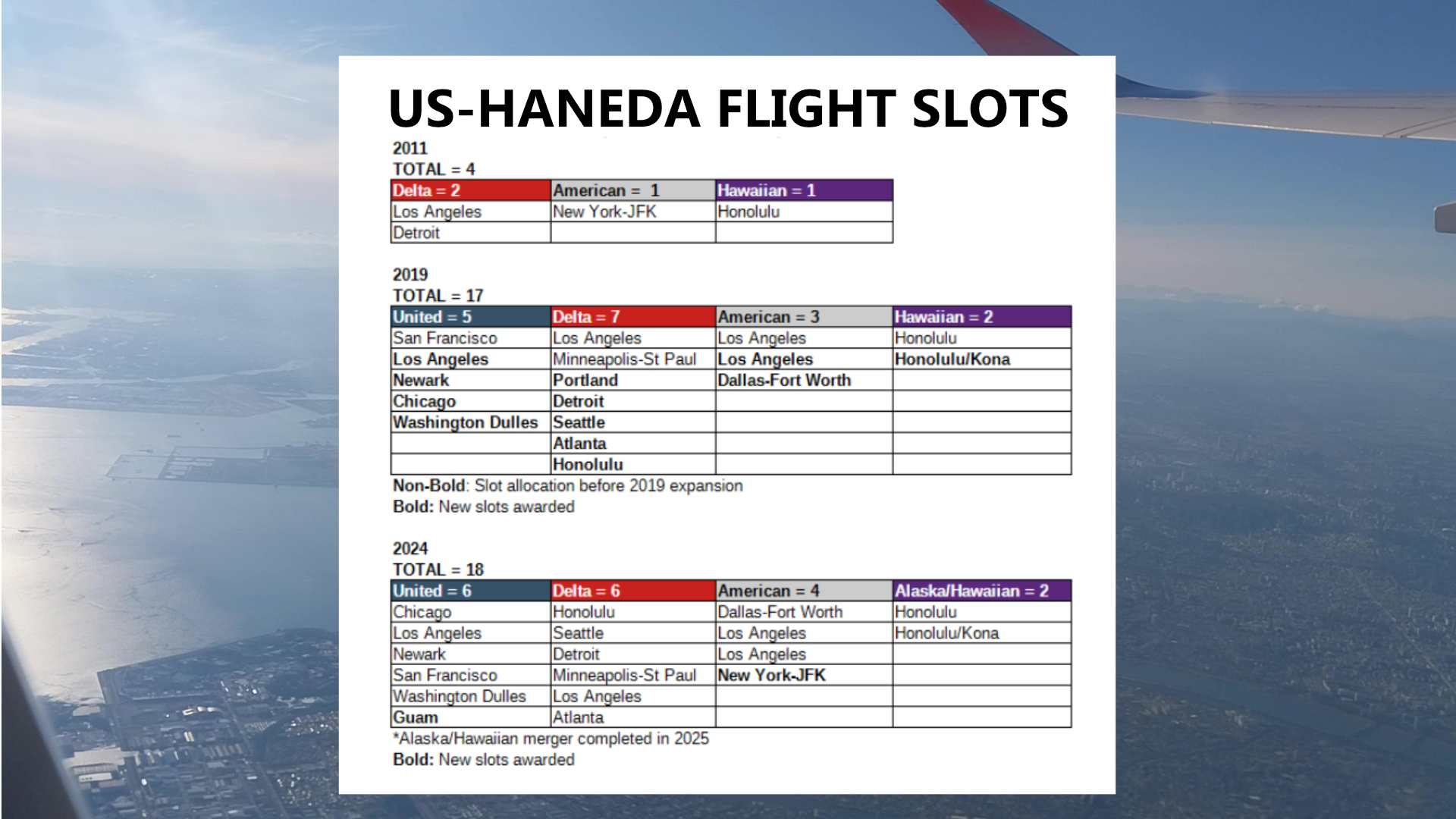
The responsibility of awarding the US-based airlines with the coveted flight slots at Haneda is under the US Department of Transportation (USDOT). Delta applied for and would be one of the three airlines awarded the initial four slots at Haneda in 2010, getting two (Los Angeles and Detroit). The other two were awarded to American for its route from New York-JFK and Hawaiian Airlines for a new route from Honolulu. Delta’s return to Haneda after the shift to Narita would take place on February 20, 2011. Delta, American, and Hawaiian became the first US-based airlines to offer flights to both Tokyo area hubs.
Later in 2019, the flight slot allocations for US airlines at Haneda would be expanded to 17. Delta would add to its presence at Haneda securing five more slots for Seattle, Detroit, Atlanta, Portland, and Honolulu. Hawaiian would get an extra slot for an additional service to either Honolulu or Kona. American would maintain three: Dallas-Fort Worth and two daily to Los Angeles. After getting its first slot to San Francisco before 2019, United went up to five slots with four more for Newark, Chicago O’Hare, Washington-Dulles, and Los Angeles. Like Delta, United built a significant presence in Japan after acquiring Pan American’s flight rights in the country in the 1980s and later through its merger with Continental Airlines.
Both Delta and United have been the biggest players among the US carriers in Japan. With their own trans-Pacific flights to their US hubs from Narita and Haneda, they also have a history of operating Fifth Freedom flights to cities in Asia from Tokyo. American seemed to be the odd-man out with the lesser presence, but a battle would take place between the Big 3 US carriers to secure a Japan-based airline partner in the late 2000s.
United would secure a local partner All Nippon Airways (ANA) through Star Alliance, which would later become a dominant trans-Pacific Joint Venture. Japan Airlines (JAL) was tied to American Airlines after it joined oneworld in 2007. However, around the same time JAL went through the biggest corporate failure in Japanese history and declared bankruptcy. As the saying goes “never let a good crisis go to waste,” Delta saw JAL’s struggles as an opportunity to poach JAL from American by offering a USD $1 billion equity investment. American countered with its own proposal worth USD $1.4 billion. JAL would eventually stay with oneworld and further strengthened its partnership with American.
After striking out with the two big Japanese carriers, Delta would then turn its attention to a smaller airline: Skymark Airlines. Delta has partnership to this day with Skymark that allows customers to book award travel for Japanese domestic flights. Skymark also went through its own financial troubles in the mid-2010s and again, Delta saw an opportunity to finally secure a Japan-based partner which had a significant operation at Haneda. An offer from Delta was reportedly made in 2015, which Skymark declined in favor of an investment from ANA.
Delta very much gave up trying to find a partner in Japan and instead turned to South Korea. The airline had a stronger partnership with SkyTeam member Korean Air, which has a significant network of destinations in North America and Asia via Incheon. Both airlines would announce the launch of a trans-Pacific Joint Venture in 2018, with the Atlanta-based airline gaining a 14.9% stake in Korean Air’s parent company Hanjin KAL. Customers would be able to fly a Delta or Korean Air-operated flight from a US hub to Incheon, and then connect to one of the numerous destinations in Asia with Korean Air.
The Delta-Korean Air Joint Venture was a major contributing factor to the shift of Delta’s focus in Asia from Narita to Incheon. Following the Northwest-Delta merger, Delta began to gradually reduce its intra-Asia flights from Narita. When the Haneda flights were launched, it was promoted more as the airline’s main gateway to Tokyo, and trans-Pacific connecting traffic was shifted to Incheon. Eventually a complete withdrawal from Narita would take place by the early 2020s. The last flights by Delta at Narita including the last Fifth Freedom route between Narita and Manila took place just before the global pandemic in March 2020.
The Narita Withdrawal in Retrospect
While Delta could have maintained at least one flight at Narita, the available connections on SkyTeam member carriers are far surpassed by what you can get with United/ANA and American/JAL duos.
Many of us can understand why Delta would end its Fifth Freedom flights and most of its trans-Pacific flights given the circumstances, but I have asked why Delta never maintained at least one route to the US mainland from Narita. Even before the COVID-19 pandemic grounded most of the global aviation industry, it was the only airline of the four US-based carriers operating at Tokyo that
fully left Narita.
Despite the long and storied history, Delta made a business move given its own internal data and assessment with its gradual withdrawal and eventual closure of its hub at Narita. Airports including the major hubs have seen routes launched and suspended, and airlines that come and go for various reasons. In the case of Delta at Narita, some factors include more and tougher competition on its Fifth Freedom routes, and its failure to secure a Japan-based partner. The partnership with Korean Air and more non-stop trans-Pacific flights made the Narita hub redundant. Though digging deeper, having a hub thousands of miles away from the rest of its network was costly.
Narita and the rest of Japan has been known as a costly place to operate for airlines. Fuel costs have been historically among the highest in the world, and having a significant operation at Narita required aircraft, pilots, and crew to be rotated from the US. The biggest issue that affected Northwest and later Delta for decades was the costs and the state of Japan’s economy which stagnated after its rapid post-World War II growth. In a report from The Japan Times in 2002, then-Northwest Executive Vice President Philip C Haan was quoted telling reporters “We’re committed to Japan and we’d like to see the economy of Japan get going again.” Haan addressed the high costs of operating at Narita which he stated were twice of Hong Kong Airport which was the second most costly at the time. Haan further stated: “Frankly, what frustrates us is (that) there is almost no transparency for us to see and understand what really are the cost of operations in Narita.”
While Delta could have maintained at least one flight at Narita, the available connections on SkyTeam member carriers are far surpassed by what you can get with United/ANA and American/JAL duos. Northwest and Delta historically heavily relied on transit traffic via Narita, and it couldn’t offer much by the 2020s versus what it could offer via Incheon. So Delta saw it was best to focus its Tokyo operations at Haneda. This can be debated, but it seemed the cost of maintaining an operation at Narita was probably not worth it in Delta’s view.
Conceding Further Ground in Haneda
Delta’s loss of the Portland slot and United securing the Guam route is why United is now even with Delta at Haneda.
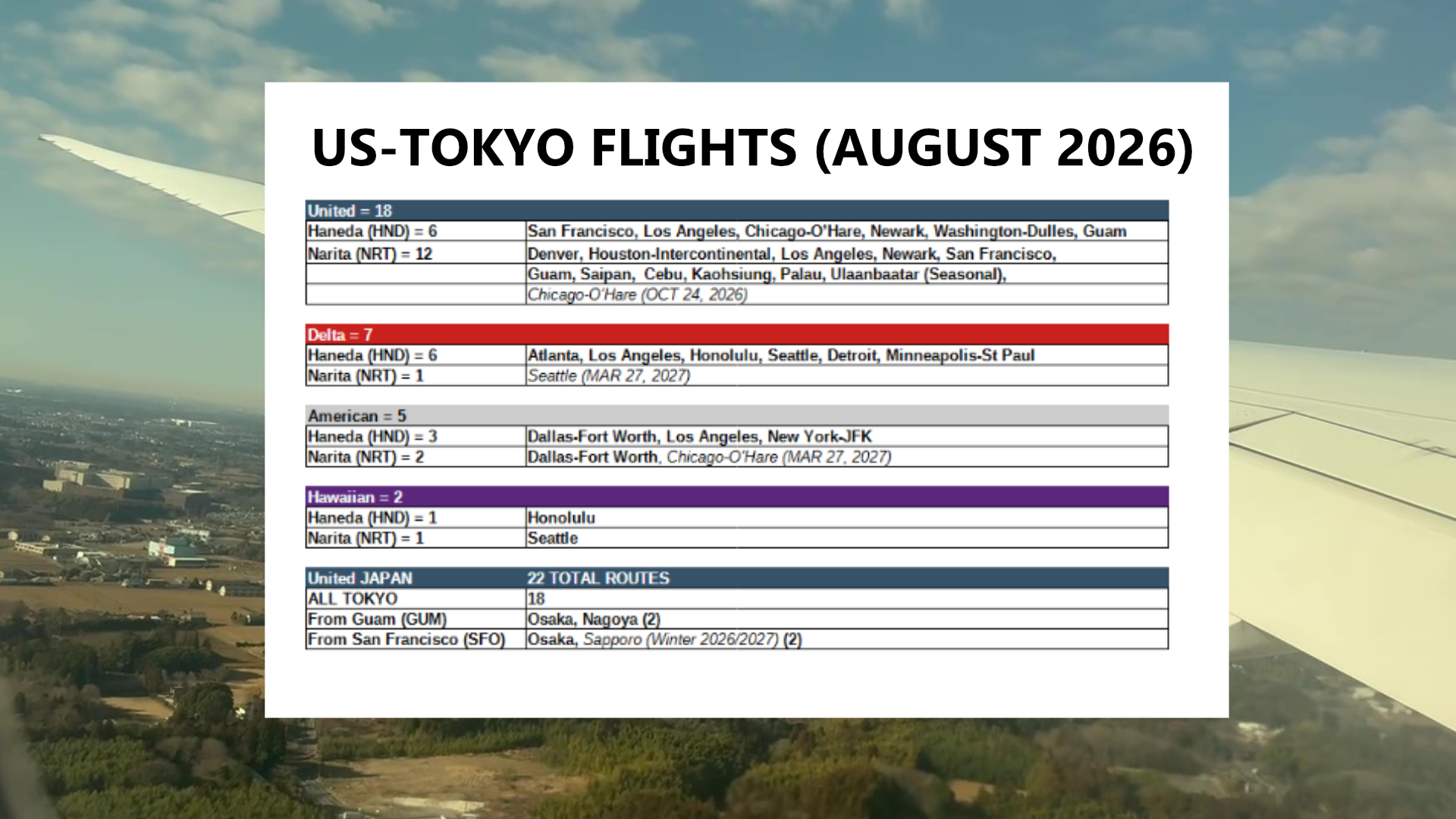
Delta is still ahead of American and the recently merged Alaska/Hawaiian when it comes to flights to/from Tokyo. The Atlanta-based carrier currently has 6 routes from Haneda (Atlanta, Detroit, Honolulu, Los Angeles, Minneapolis-St Paul, Seattle). American has four routes, with three at Haneda (New York-JFK, Dallas Fort-Worth, and twice-daily Los Angeles) and one at Narita (Dallas/Fort Worth). American will start another route to Narita from Chicago O’Hare in March 2027 bringing the total to 5. The recently merged Alaska/Hawaiian has two routes split between the two hubs: Haneda-Honolulu, and Seattle-Narita.
Meanwhile, United has taken full advantage of its flexibility at Tokyo surpassing Delta as the dominant US-based carrier from Tokyo, and they brought back their Fifth Freedom routes at Narita using Guam-based Boeing 737s to four destinations in the Asia-Pacific: Cebu, Philippines; Kaohsiung, Taiwan; Palau; and a seasonal service Ulaanbaatar, Mongolia. 6 of the routes are to/from Haneda: Chicago O’Hare, Guam, Los Angeles, Newark, San Francisco, and Washington Dulles. Though the biggest operation is at Narita with 11 routes. Along with the 4 Fifth Freedom routes, there are 7 US-bound routes from Narita: Guam, Saipan, Denver, Houston-Intercontinental, Los Angeles, San Francisco, and Newark. It will grow to a total of 18 when United resumes its Chicago-Narita route this upcoming October 24.
United not only continued to maintain its presence at both Tokyo area hubs, but also its services to other cities in Japan. United also operates flights from Guam to both Osaka and Nagoya, and a non-stop flight between San Francisco and Osaka. Adding to its presence even further, United will also launch a seasonal service from San Francisco to the northern city of Sapporo this upcoming winter season. By the end of the year, United will offer flights on a total of 22 routes to/from Japan.
Back at Haneda, Delta was the biggest beneficiary among the US carriers when it came to flight slot allocations at the Tokyo area hub. During the expansion of the available Haneda slots in 2019, Delta’s slots would be 7 of the 17 for flights to Minneapolis-St Paul, Seattle, Detroit, Atlanta, Portland, Honolulu, and Los Angeles. Each of the US-Haneda slots did come with specific conditions summed up by saying they had to use it regularly on the route as applied for. These slots were awarded before the COVID-19 pandemic, and when air travel was grounded the USDOT allowed for the airlines to hold the slots even while unused until October 2023. While the other three airlines resumed their routes, Delta did not resume its flights to Portland and Honolulu immediately.
As the waiver period was close to its end, Delta tried to appeal to the USDOT to allow for flexible use of the unused Portland and Honolulu routes. Its appeal was denied by the USDOT and Delta was forced to resume flights to Honolulu. The Portland slot was given up since it was unused. Both United and American Airlines would apply for Delta’s vacated Haneda-Portland slot, with American eventually winning it for its Haneda-New York JFK route that started in 2024. United would eventually secure another slot for its Haneda-Guam route.
Delta’s loss of the Portland slot and United securing the Guam route is why United is now even with Delta at Haneda. Both airlines have a combined majority 12 (6 each) of the 18 US airline flight slots at Haneda. American maintains its four, while Alaska/Hawaiian maintains 2 which are both used to Honolulu. Flight slots at Haneda will only become available if an airline gives it up, or the Japanese government increases the available slots for foreign airlines. Even then, airlines such as Delta have to apply for it and win the bidding process with the USDOT.
Narita and Delta's Moves in Asia
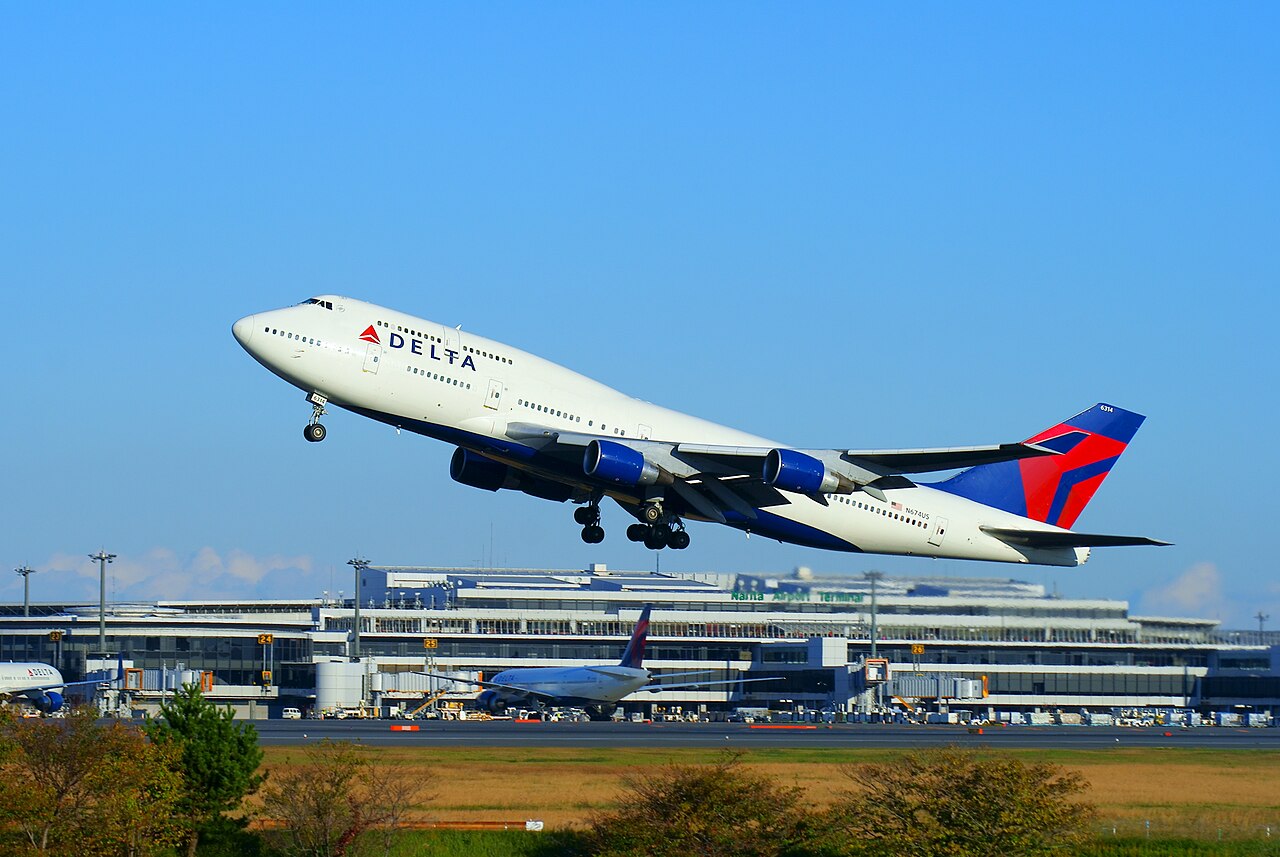
Image: Delta 747 departing from Narita Airport (~2010s). Credit: Wikimedia Commons
The Seattle-Narita route is also part to boost its Seattle hub where the majority of its routes to/from Asia operates from. It can also be seen as a counter to Seattle-based Alaska/Hawaiian which is trying to expand its presence in Asia and Japan with its own competing Seattle-Narita service.
While getting more scarce flight slots at Haneda proves to be difficult, Delta has turned to the familiar Narita hub where it will return after 7 years to expand its presence in Tokyo. Since the 6-7 years since Delta withdrew from Narita, the Tokyo-area hub has continued to be a major trans-Pacific hub. Passenger traffic has grown to exceed its pre-pandemic records serving over 42 million in 2025. Haneda is busiest air hub in terms of passenger traffic in Japan, but Narita has a unique strength: air freight handling. Narita is the busiest air cargo hub of the Tokyo-area hubs and all of Japan.
The operator of the Narita Airport recently announced plans to further expand its facilities to handle the growing passenger and cargo traffic, and Delta can be expected to tap into that future growth opportunity. Delta doesn’t have much connecting options from Narita including from SkyTeam partner carriers, but the primary reason for the return is to offer more choices for customers to travel to Tokyo. The Seattle-Narita route is also part to boost its Seattle hub where the majority of its routes to/from Asia operates from. It can also be seen as a counter to Seattle-based Alaska/Hawaiian which is trying to expand its presence in Asia and Japan with its own competing Seattle-Narita service.
I can see Delta add more US-Narita flights to complement its Haneda operations, but we probably won’t see the return of Fifth Freedom routes. United is able to operate its current Fifth Freedom routes at Narita using its Guam-based flight crews, pilots, and 737s. Delta and the other US carriers do not have a significant hub as close as Guam is to Japan to support much intra-Asia operations. Since it positions itself as a premium airline in the US, its narrowbody aircraft are better used on US domestic routes instead of being rotated between the US and Japan. Premium products matter in Asia especially on highly competitive routes from Tokyo to destinations such as Bangkok, Hong Kong, Taipei, Seoul, and Singapore, so either Delta puts its best offerings forward or not.
If Delta expands its services in Asia it will very likely do so with non-stop flights from the US using widebody aircraft with its best cabin products from the US. We can already see this with the recent launch of the Los Angeles-Hong Kong service, and the highly anticipated return to Manila with the Los Angeles-Manila route in March 2027. Singapore is among the former destinations previously served by a Fifth Freedom flight from either Northwest or Delta, which Delta is reportedly expected to make a return. Delta is likely to use its widebody Airbus A350 aircraft for a non-stop flight from the US as they will do so on the Los Angeles-Manila route.
For those who experienced flying with Northwest and/or Delta at Narita in the past, the Seattle-Narita route will definitely bring back some nostalgia of what was once was. Given Delta’s most recent history and the current presence of SkyTeam carriers at Narita, its very likely Delta will once again return to Narita Airport’s Terminal 1 North Wing. Delta will be like that old friend that Narita will welcome back, though it will be far from the golden years past. However, Narita is expanding its facilities and that gives Delta some opportunities to strengthen its presence in Tokyo and Japan.