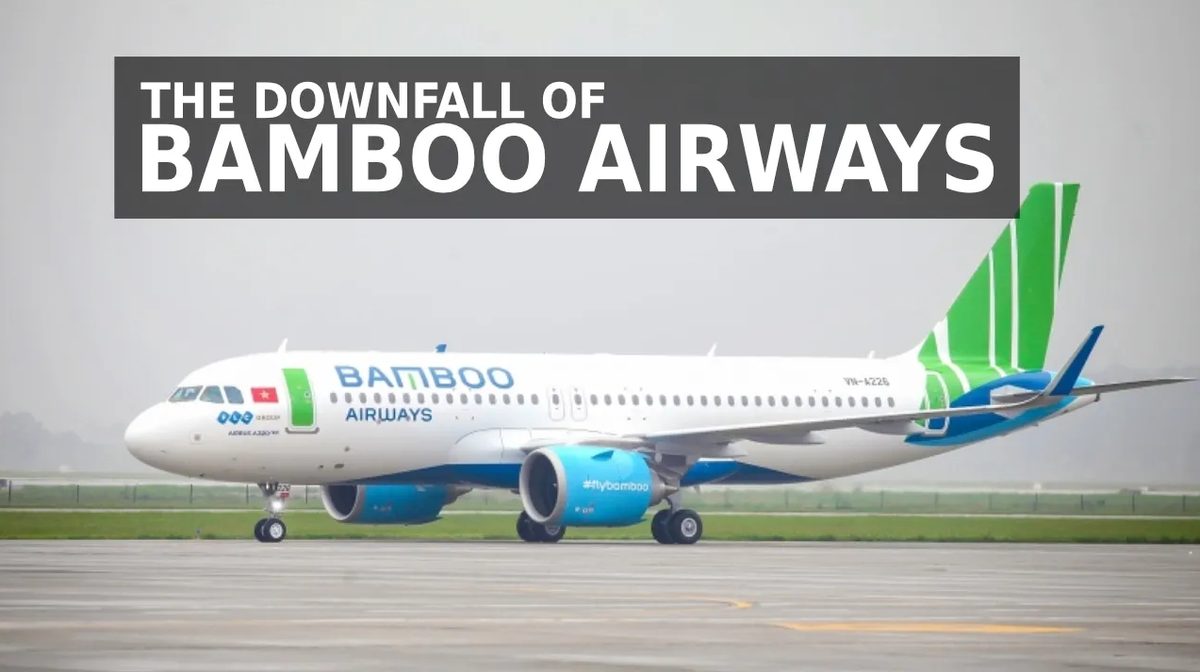
This article takes a look at the history of Bamboo Airways, its rapid, ambitious growth, how it became a global aviation bright spot amid the COVID-19 pandemic, and how a series of problems – self-inflicted and the market – led to its downfall.
Watch the video version.
At the height of the COVID-19 pandemic when most of the global aviation industry struggled, there was one airline, Bamboo Airways, which was seen as a bright spot the industry. Launched a year before the lockdowns were imposed, the ambitious Vietnam-based airline company would rapidly grow its fleet and expand its network to reach destinations in Australia and Europe. Unless you are familiar with its short history, one can say Bamboo Airways now looks more like a struggling upstart today. As of the publishing of this article, it is down to just one aircraft operating charter flights. While there were external factors and a company scandal that negatively impacted the airline, Bamboo Airways is a cautionary tale of an airline expanding rapidly in an unsustainable way.
The Rise of Bamboo Airways
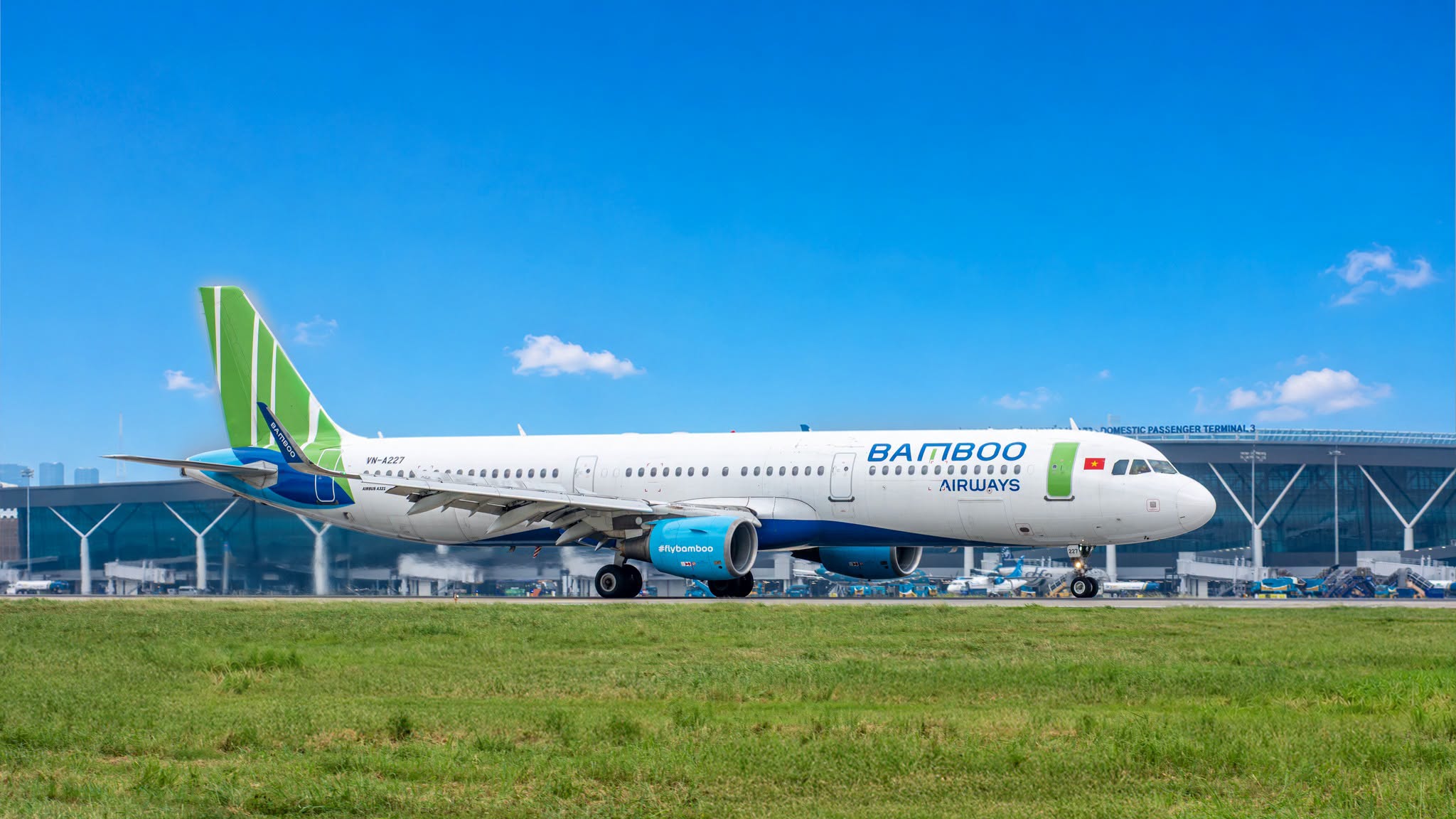
Image: Bamboo Airways A321. Credit: Bamboo Airways
The founding of Bamboo Airways shares a similar origin story to some of the newer Vietnam-based airlines as the leading group that launched the airline is a major property developer in the country. For Bamboo Airways, it would be the Vietnamese conglomerate FLC Group that founded the airline in 2017. Bamboo Airways would be a hybrid airline, combining the best elements of both full service and budget airline models. With its main headquarters at Quy Nhon City, it would serve the growing of the aviation and tourism industries in Vietnam. Though it would be a major part of FLC Group’s growing developments of large-scale tourism resorts.
Bamboo Airways’ plans for growth were ambitious would put it on a course to compete with the major domestic players like Vietnam Airlines and Vietjet. The airline set its sights to operate flights to around 40 routes to cities in Asia, Europe, North America, and Australia. To support its goals, the airline proceeded to sign commitments for huge orders for over 40 aircraft from both Airbus and Boeing.
The first major aircraft order made by Bamboo Airways was with Airbus for up to 24 narrowbody A321neo aircraft in March 2018. After its first flight, a second large aircraft order for up to 20 Boeing 787-9 Dreamliner aircraft was then placed by the airline in February 2019. With the 787 order and the delivery of the first aircraft later, Bamboo Airways would also be the first private airline in Vietnam to operate the popular widebody jets.
Bamboo Airways’ first flight would take place on January 16, 2019. Using a leased Airbus A320 aircraft, flight QH202 departed Ho Chi Minh City’s Tan Son Nhat Airport for Hanoi’s Noi Bai Airport with 180 passengers. Immediately after its launch, Bamboo Airways’ fleet would grow to 28 aircraft. It operated flights to around 40 domestic and international destinations within a year after its launch.
Pandemic Bright Spot
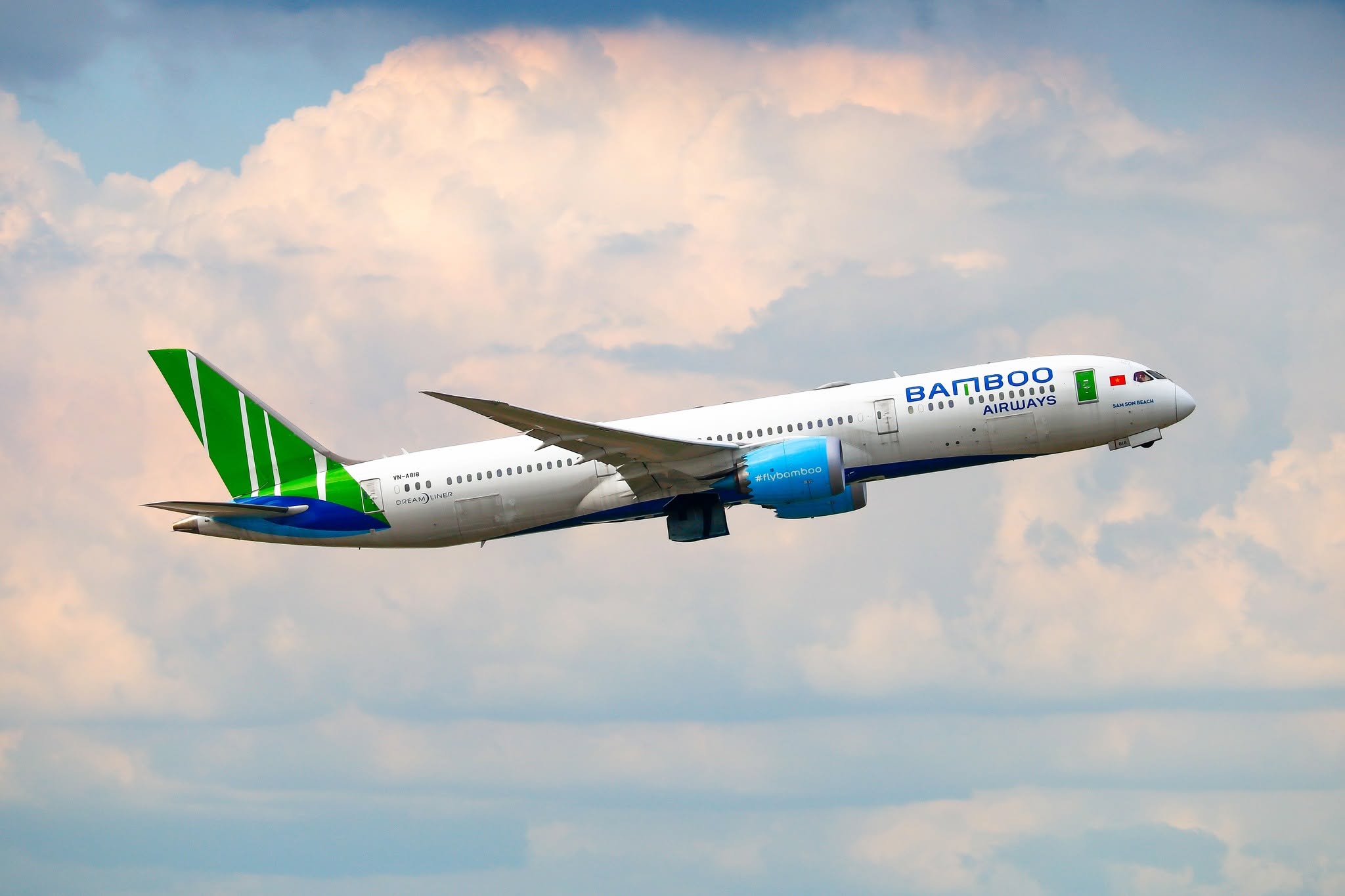
Image: Bamboo Airways Boeing 787. Credit: Bamboo Airways
As COVID-19 cases began to climb in early 2020, Bamboo Airways began suspending its routes to South Korea. What started as a suspension was among the first of a larger scale shutdown in what the International Air Transport Association (IATA) described as “largest shock to commercial air travel and aviation” since World War II. Global travel restrictions would ground the aviation industry. While well-established budget and full-service carriers struggled seeking assistance from their own governments and investors to stay afloat, Bamboo Airways would be a bright spot in a very dark year for the industry.
Pandemic restrictions would be eased in Vietnam, which allowed for the gradual resumption of domestic flights. In 2020, Bamboo Airways saw a growth of total flights and passenger traffic by 10% compared to the prior year. While the workforce declined by 17%, the number of pilots and cabin crew who joined the airline increased by 20%. It served a 20% market share of the domestic Vietnam market, and amid the crisis the airline added 2 aircraft bringing its fleet to around 30 aircraft. The aircraft added were the smaller Embraer E195 to its fleet, which allowed it to introduce jet services to the southern Vietnamese island of Con Dao in 2021.
As global air travel gradually resumed after the lockdowns and travel restrictions, Bamboo Airways would then expand its services to Europe and Australia using its 787 aircraft. Long-haul flights were operated to Sydney, Frankfurt, and London. The flights to London would first be operated to Heathrow before it was shifted to Gatwick the following year in 2022. While Bamboo Airways on the surface showing a great post-pandemic recovery, multiple internal problems and market changes would lead to subsequent, rapid decline.
The Rapid Fall
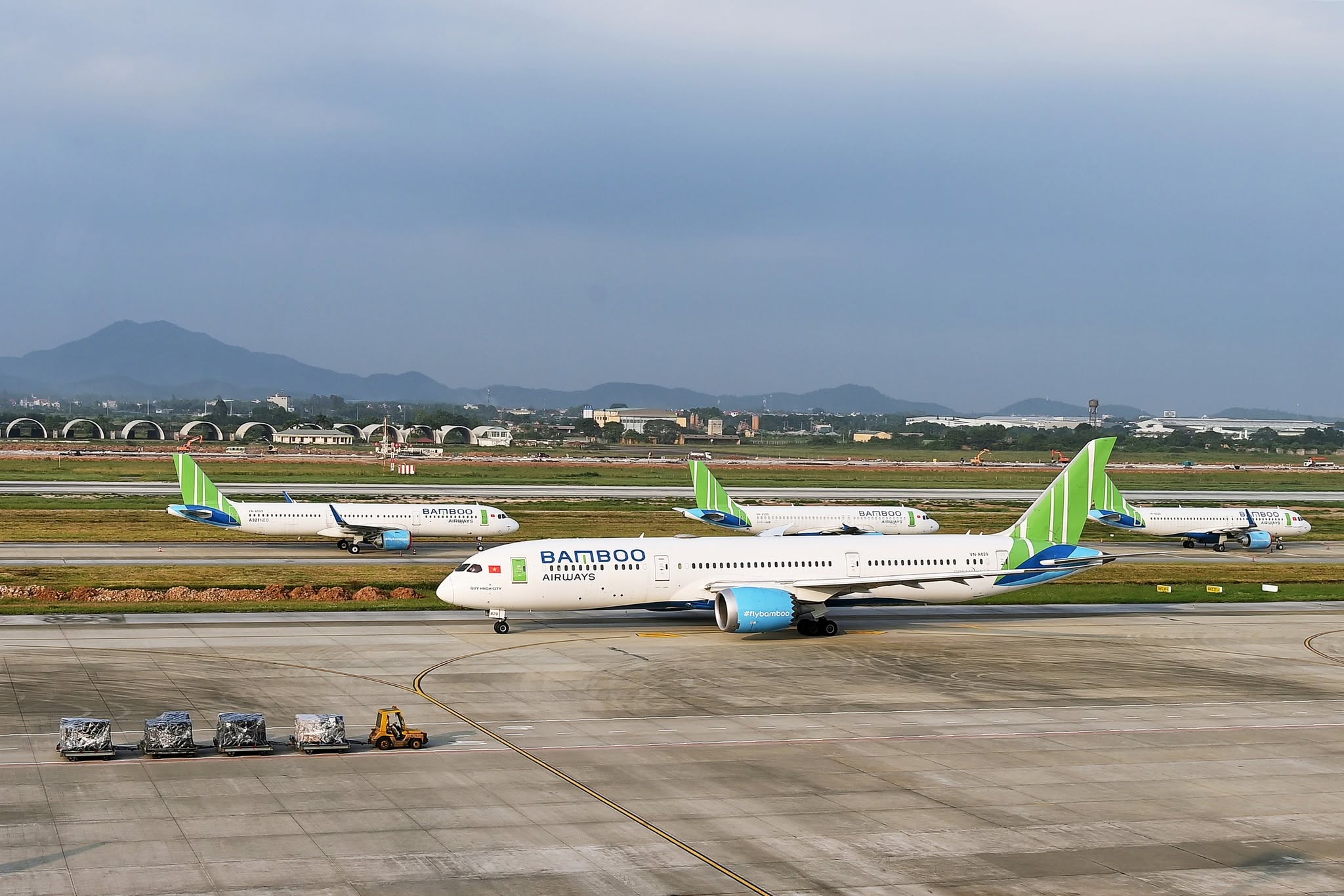
Image: Bamboo Airways Boeing 787 with 3 A321s in the background. Credit: Bamboo Airways
After the travel restrictions and grounding of airline fleets worldwide, the global aviation industry was given a fresh start. The established airlines that were struggling gained back lost ground. While Bamboo Airways was seen as a bright spot in aviation globally, not just within Southeast Asia, its rapid, ambitious growth also put it in a dangerous position. Much of its fleet was leased, and as a result it had a lot of liabilities.
Bamboo Airways had yet to post a gross profit despite an increased revenue in 2022 compared to the prior year (VND 11.73 trillion). Losses were reported citing the challenging North Asia market, and the Russian-Ukraine conflict caused jet fuel prices to rise. Reported liabilities grew from VND 8.7 trillion in 2021 to VND 18.8 trillion at the start of 2022. That same year, FLC Group Founder and Chairman Trinh Van Quyet was arrested for falsely inflating the value of the company. The FLC Group scandal led to the conglomerate selling the airline the following year in 2023 to a group private investors.
Coming into 2023, the airline had 30 aircraft and operated 75 domestic and international routes. However, it would be slashed significantly as part of the restructuring, Bamboo Airways would suspend all long-haul and unsustainable routes. The airline gave up its fleet of widebody 787s. Its fleet would be reduced to 8 A320 aircraft operating within Vietnam. These moves allowed the airline to reduce its aircraft rental debt by VND 2 billion.
Leading the rehabilitation of Bamboo Airways would be Luong Hoai Nam, who took over as General Director the airline in 2023. He noted the airline’s plans saying: “It is not necessary for Bamboo Airways to operate international routes that are not making profits and are incurring huge losses. The company will concentrate on operating domestic routes efficiently to gradually reduce losses, reach a break-even point and then make a profit. Later we will expand our domestic network and resume international flights under a new business model and with much greater international competitiveness than previously.”
Luong noted the airline’s creditors had been willing to work with the airline saying: “To date, I have not seen any signs of a lack of goodwill from creditors nor domestic and international business partners of Bamboo Airways, including partners who continue to cooperate and partners who are forced to temporarily suspend cooperation due to Bamboo Airways' restructuring.”
However, Luong and his team would not be able to bring back the airline to its former state. FLC Group would later buy back the airline in September 2025. The airline had to address is liabilities reported to be worth around USD $100 million to Vietnam Airports Corp., and USD $17 million to the Vietnamese government. The airline would continue to fall further when all its regularly scheduled flights were suspended in August 2026. At present, Bamboo Airways operates just one A321 aircraft on charter flights between Da Nang and Macau.
One Last Aircraft
Down to just one last aircraft and without regularly scheduled flights, it seems almost all attempts to save Bamboo Airways have failed. Its losses in the market have since been absorbed by Vietnam Airlines and Vietjet, while its financial burdens may make a return highly unlikely if not impossible.
It could be argued that Bamboo Airways’ growth plans was in a way, to put the young ambitious airline in the best position to compete with the bigger Vietnam Airlines and Vietjet. Though it could also be argued it took on too much liabilities for a young airline, setting itself up for failure. At its peak it was a bright spot in a world that stood still amid the pandemic. Now it is simply a shell of itself. Its failure can be seen in different ways, but for many it can be agreed that it is a cautionary tale of an airline going through rapid, but unsustainable growth.