Features
T'way Air to Trinity Airways: South Korea's first budget airline
Written by Jeffrey Teruel | Published on September 10, 2026
Features
Written by Jeffrey Teruel | Published on September 10, 2026
Trinity Airways (formerly T'way Air) continues its two-decades long history as a leading budget airline in South Korea.
The major headlines of South Korea’s aviation industry especially as of late have been made by the now-merged Korean Air and Asiana Airlines. While South Korea is one of the few countries in the world that boasts more than one large Full Service Carrier (FSC), it also has arguably one of the most highly competitive budget airline scenes with around nine Low Cost Carriers (LCC). These airlines include some familiar names to aviation geeks and industry observers such as Jeju Air, Jin Air, and Air Premia. They all compete against the Korean Air-Asiana duo on routes beyond South Korea. Among these budget airlines is South Korea’s first LCC: Trinity Airways (formerly T’way Air).
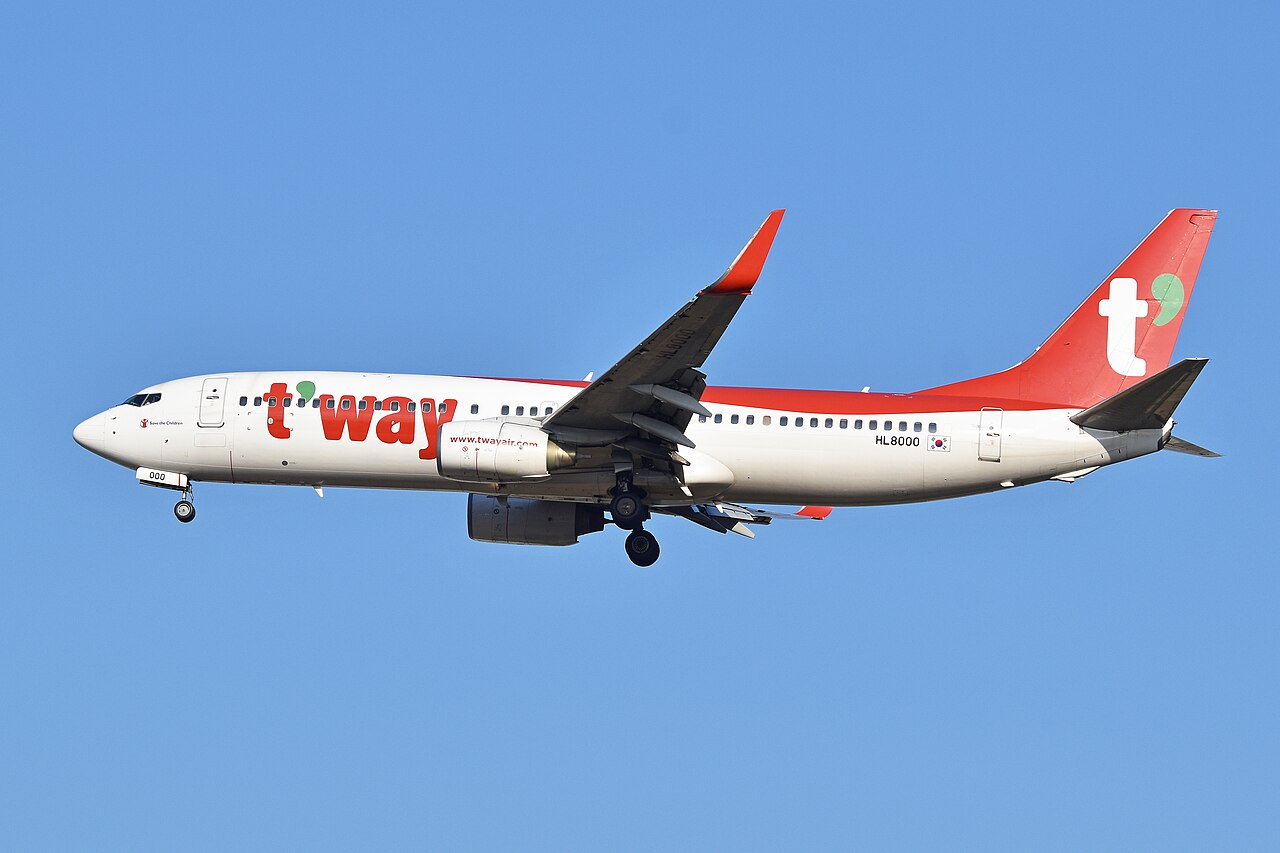
Image: T'way Air Boeing 737-800 (Credit: Wikimedia Commons)
Since its launch more than two decades ago, Trinity Airways has been a major player and pioneer in South Korea’s aviation industry. It was among the first airlines in the country to open up international routes outside of the country’s main hubs of Seoul and Busan, and more recently became the first local budget airline to launch flights to Europe. After its parent company got acquired by another South Korean conglomerate, it now flies under its current name effective September 10, 2026.
Hansung Airlines and Early Turbulence
Trinity Airways was founded in the early 2000s by a group of aviation industry veterans who planned to a launch a new airline, though its former T’way name was not its first. The founding group planned to launch the then newly formed airline as Hansung Airlines from Cheongju in central part of South Korea instead of the two Seoul-area hubs Incheon and Gimpo, or even the southern city of Busan. Hansung would adopt a budget airline model intending to offer fares around 70% of the existing air travel options, and operate niche domestic and international routes not operated by the existing airlines like Korean Air and Asiana at the time.
Hansung Airlines would acquire an ATR 72-200 turboprop for its first flights which took place on August 31, 2005. The budget airline’s first flight was between Cheongju to the popular southern South Korean island of Jeju. The newly launched budget airline planned to expand its domestic network on the Gimpo-Jeju, Jeju-Gwangju, and Gimpo-Yangyang routes. International flights would be launched to Southeast Asia, Japan, and China.
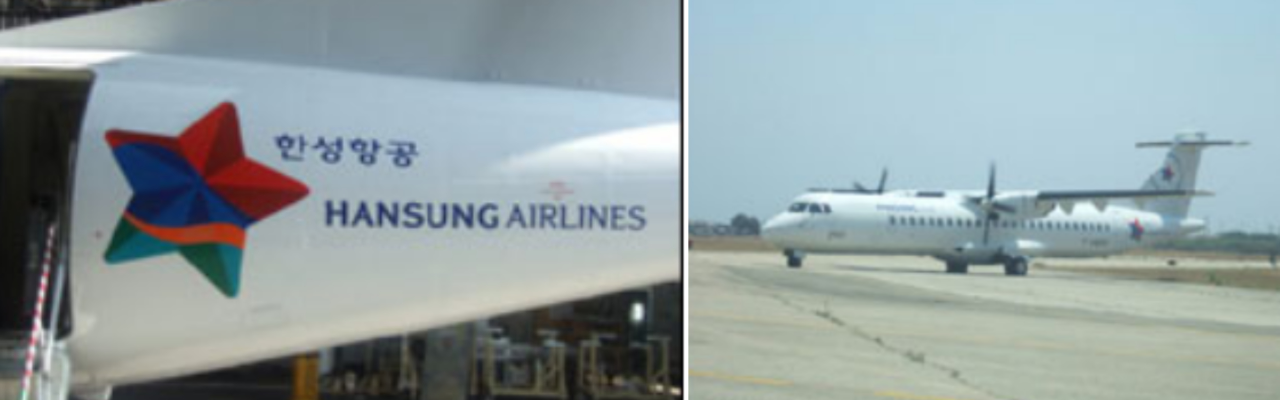
Image Credits: YTN (South Korea)
According to accounts such as report from the Korea Joong Ang Daily published in February 2008, those flying with Hansung Airlines did not get any inflight meals or newspapers that were provided onboard Korean Air and Asiana domestic flights. Instead, Hansung had flight attendants giving out balloon animals to children, and digital photos of passengers taken by flight attendants were later emailed to the passengers. Magic shows were also done onboard. Instead of a frequent flier program, the airline had a membership service with perks such as priority booking during the peak Lunar New Year and Chuseok holiday periods.
While Hansung Airlines was the first South Korean budget airline to operate its inaugural flight in 2005, it would not be long before it was joined by another ambitious challenger: Jeju Air. Jeju Air’s first flight would take place the following summer in June 2006. As other challengers including those under Korean Air and Asiana were later established, both Hansung and Jeju Air were the first to address concerns about budget airlines locally such as whether lower fares would lead to lack of safety and comfort for customers in South Korea.
However, Hansung Airlines would encounter turbulence and financial difficulties which led to a suspension of operations in 2008. With aircraft rental fees worth around KRW 1 billion (~USD $767,709) per aircraft, the Hansung had taken on an accumulated debt of around KRW 27.2 billion (~USD $20.3 million) during the first half of 2008. The reasons cited for the financial difficulties were high oil prices and the depreciation of the Korean Won, which impacted the costs of maintaining its aircraft. Services on the Cheongju-Jeju and Gimpo-Jeju routes would be suspended on October 16, 2008, and Hansung entered a business rehabilitation process. It would be nearly two years before Hansung Airlines would return to the skies, which would happen with a new name.
First Re-Launch as T’way Air
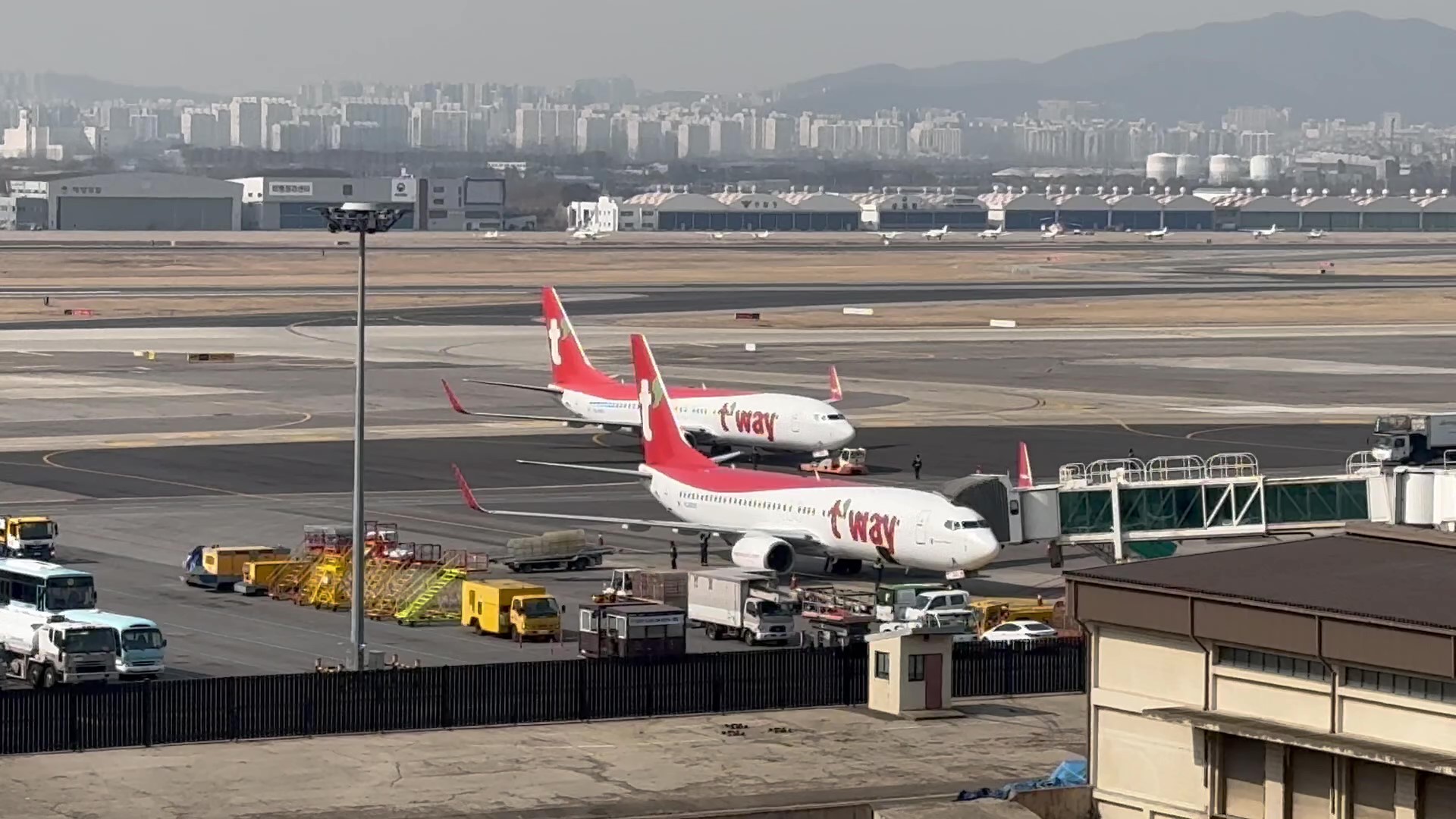
After the suspension of Hansung Airlines in October 2008 and a nearly two-year business rehabilitation process, a new Airline Operator Certificate (AOC) was required for the airline to resume operations. On July 26, 2010 the company submitted its application with a new name: T’way Air. Replacing the ATR 72 turboprops, the refreshed budget airline would take on two Boeing 737-800s and shift its headquarters from Cheongju to Seoul. Its first flight as T’way Air between Seoul Gimpo and Jeju took off a few months later in September 2010.
For around 16 years to the present, T’way would expand its network beyond South Korea to destinations in Japan, Taiwan, Southeast Asia, and China. T’way would later take advantage of the concessions that Korean Air and Asiana made to get their merger approved to become the first South Korean budget airline to operate flights to Europe.
Just over a year after its relaunch as T’way Air, the airline launched its first international route connecting Seoul Incheon and Bangkok in October 2011. The first international route from Gimpo Airport would be started in October 2012 connecting Gimpo and Taipei’s Songshan Airport. Beyond Seoul, T’way would be among the leaders of airlines to launch both domestic and international flights from other South Korean cities such as Daegu and Busan. The airline launched its cargo business in 2013. Two years later it launched flights to its first US destination Guam with direct flights from Incheon in 2015, followed by Saipan the following year.
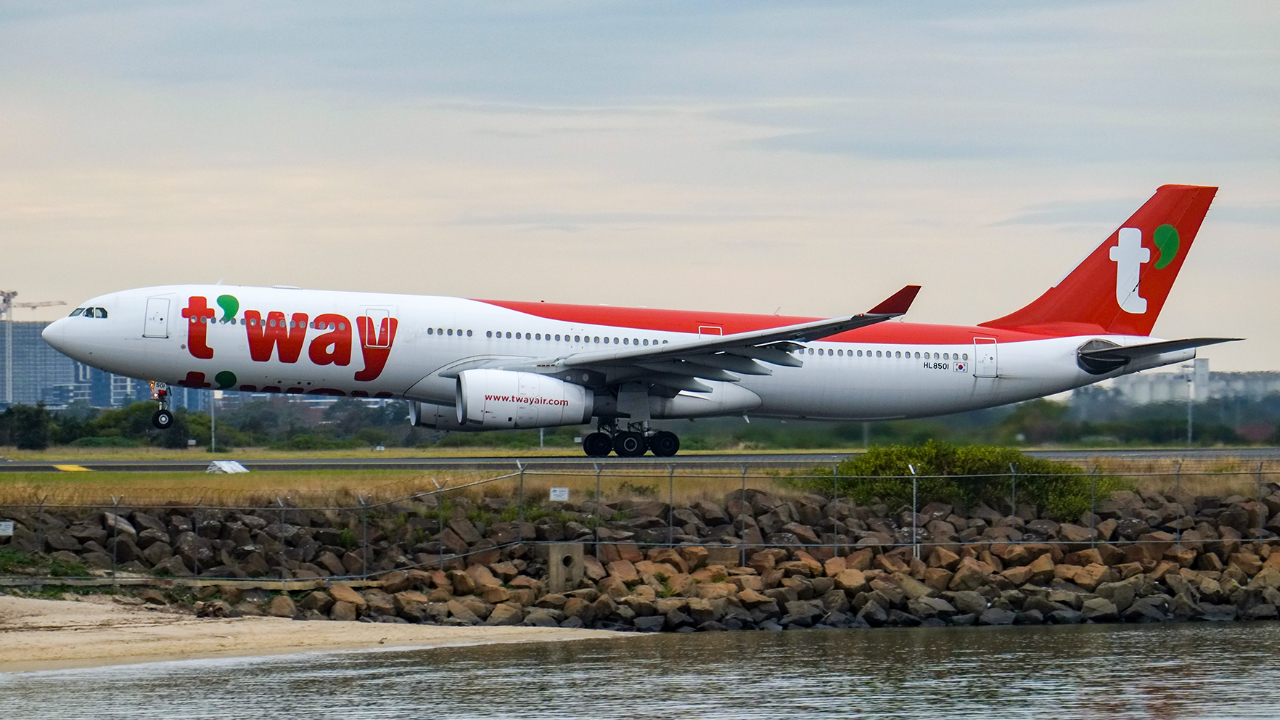
Image: T'way Air Airbus A330 (Credit: Wikimedia Commons)
The COVID-19 pandemic would disrupt travel across South Korea and the world in the early 2000s, though T’way Air saw the post-pandemic travel boom as an opportunity to launch long-haul operations using widebody jets. T’way welcomed its first Airbus A330-300 aircraft in 2022, and launched one of its first major long-haul routes from Incheon to Sinagpore before later adding Sydney, Australia to its network. The same year, T’way welcomed its first Boeing 737-8 (737 MAX 8). With the slots given up by the Korean Air-Asiana duo for their merger approval, T’way received flight rights and since launched flights to five points in Europe: Zagreb, Paris, Rome, Barcelona, and Frankfurt. T’way then expanded its widebody aircraft fleet with the Boeing 777-300ER and launched Incheon-Vancouver flights in 2025.
Trinity Airways: The Third Version
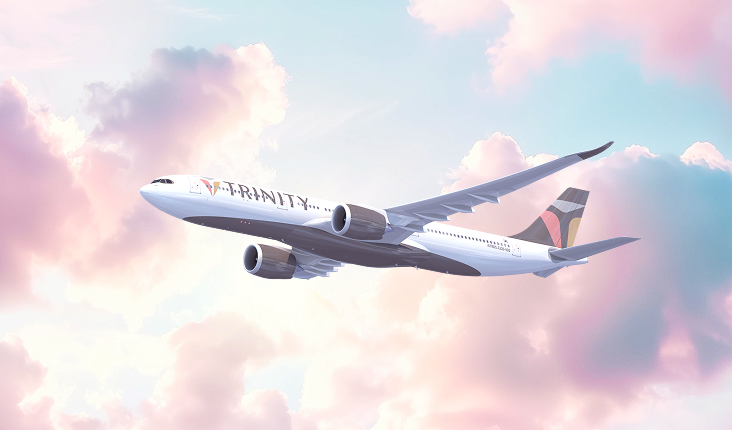
Image: Artist depiction of a Trinity Airways Airbus A330neo (Credit: Trinity Airways)
T’way Air had grown to be one of the leading budget airlines in South Korea, and one of the even few airlines from the country both LCC or FSC with regularly scheduled long-haul passenger flights to Europe. While expanding its network and fleet, the airline would undergo a major change within its business. On February 2025, the South Korean leisure conglomerate Daemyung Sono Group would become the largest shareholder of T’way Air acquiring a 46% stake in the airline worth around KRW 250 billion. A decision was made to rebrand the airline to Trinity Airways which was approved a month later. It was later announced that name change would become official on September 10, 2026.
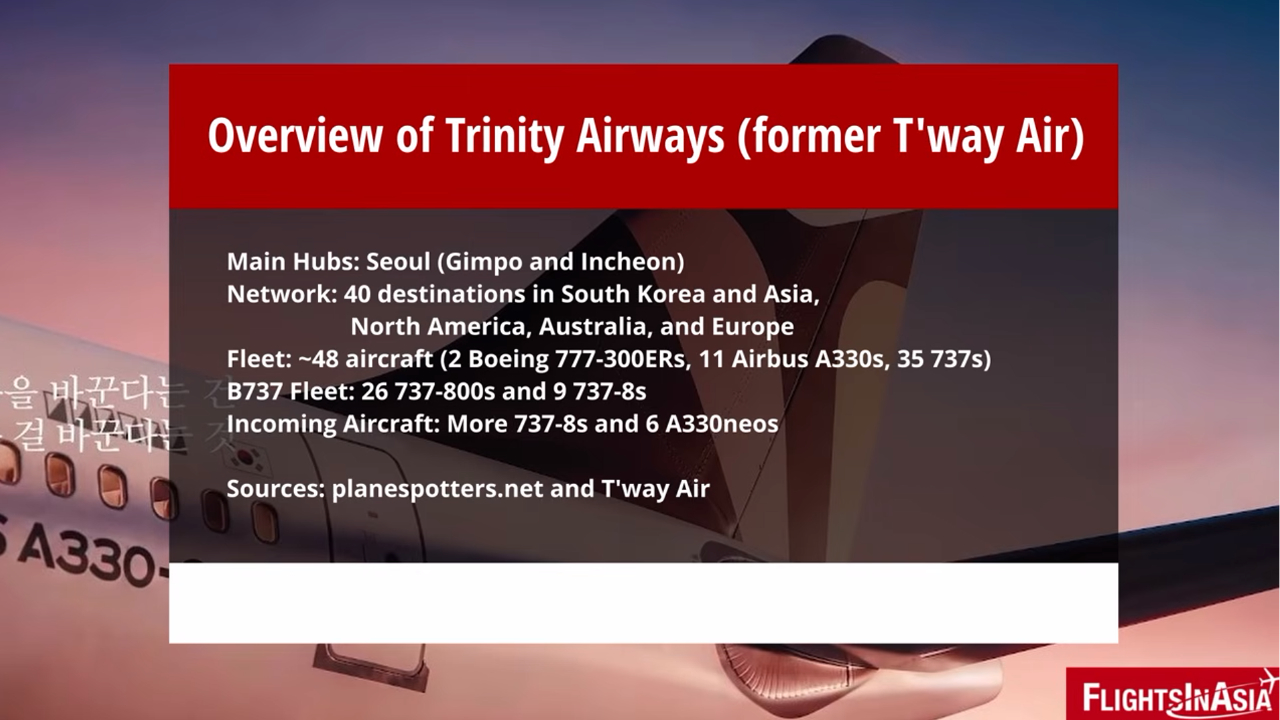
Trinity Airways will maintain its dual Seoul hubs at Incheon and Gimpo, offering flights to over 40 destinations in South Korea, Asia, Australia, Europe, and North America. According to planespotters.net, its fleet consists of around 50 aircraft including two widebody Boeing 777-300ERs and the 11 Airbus A330s. Though the main workhorse of its fleet is the narrowbody Boeing 737s, including 26 older 737-800s and 9 newer 737-8s (737 MAX 8). Following the relaunch, Trinity Airways is expecting to take delivery of 6 newer Airbus A330-900s (A330neos) which will replace some of its older A330s. More deliveries of rest of the airline’s orders for the 737-8s will take place through 2027.
As the T’way Air name gets replaced by Trinity Airways, it maintains the ambitions of the airline looking to continue to take advantage of the current aviation market in South Korea. While Korean Air and Asiana will be merged to one airline, the two major airlines’ budget subsidiaries Air Busan, Air Seoul, and Jin Air will be combined to operate under Jin Air next year.
While there are good opportunities, Trinity Airways has to consider factors that can lead to turbulence later. Trinity Airways is exposed to vulnerabilities with its long-haul network and all-leased aircraft fleet. Low cost long-haul operations have been challenging for even bigger budget airline groups, and Trinity Airways also faces the same problems related to operating costs. Other Asian budget carriers offer great competition and alternatives between their home countries and South Korea.
As fuel prices and aircraft lease payments are paid in US Dollars, any devaluation of the Korean Won can lead to higher operating costs. The airline would have to fill up seats otherwise the routes would be operating at a loss. Some have raised concerns of the airline’s financial state with a reported total equity of around KRW 41.3billion (~USD $30.84 million) and liabilities at around KRW 1.8249trillion (~USD $1.362 billion).
Trinity Airways competes not just with the other nine local budget airlines, but also with other LCCs from the region. While it changes its name, the challenges for Trinity Airways from both within South Korea and abroad remain. It navigates its own challenges as it proceeds with its ambitious expansion plans as the South Korean aviation industry undergoes big changes which the impact will be felt for years to come.