
This article discusses the growth of COMAC aircraft operations – specifically the C909 and the C919 – in Southeast Asia.
Watch the video version
Seeking to break away from the Boeing and Airbus duopoly, China sought to develop its own aircraft manufacturing capabilities through the Commercial Aircraft Corporation of China (COMAC). Since its launch in 2008, COMAC now sells two locally produced aircraft. The first is the regional jet C909 (formerly the ARJ-21), and the narrowbody twin-engine C919. While working to expand its line of aircraft to include the widebody C929, there are now C909 in operation outside of Mainland China. The operations of the aircraft outside of China are part of COMAC’s efforts to prove their capabilities, secure more orders, and to obtain key certifications in bigger aviation markets.
Overview of COMAC Aircraft Orders and Deliveries
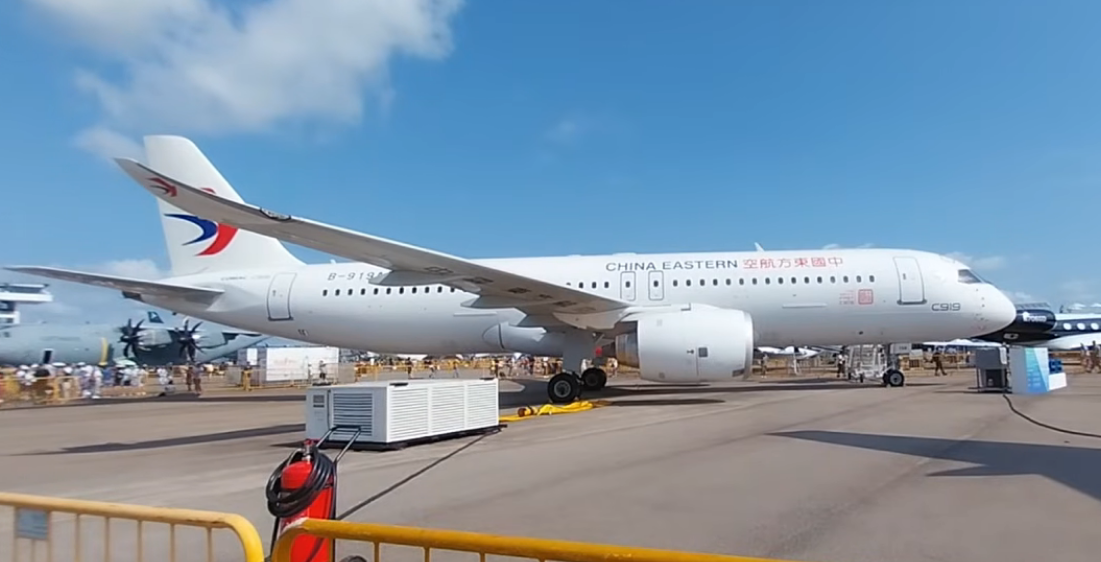
Image: China Eastern C919 at the Singapore Airshow 2024
Based on multiple reports from media outlets both in and outside of China, COMAC has received more than 1000 orders for the locally produced C909 and C919s as of the end of 2025. So far it has been reported COMAC has delivered around 214 aircraft. The deliveries include 182 of the older C909 regional jets, while around 32 of the narrowbody twin-jet C919s are now operating mostly with major Chinese airlines such as Air China, China Southern, and China Eastern. The C909s have become a part of regional operations within Mainland China, while the C919 has seen its use on routes linking major Chinese cities such as Beijing, Shanghai, Guangzhou, Hangzhou, and Changsha.
As China and its airlines continue to promote and deploy COMAC aircraft when possible, there has been more interest, aircraft orders, and the operation of the C909 and soon the C919 outside Mainland China particularly in Southeast Asia. The C909 is now being used by airlines in Indonesia, Vietnam, and Laos. COMAC also recently took another major step with its first bulk order for aircraft outside of China from a Cambodia-based airline.
The C909 in Southeast Asia
Indonesia
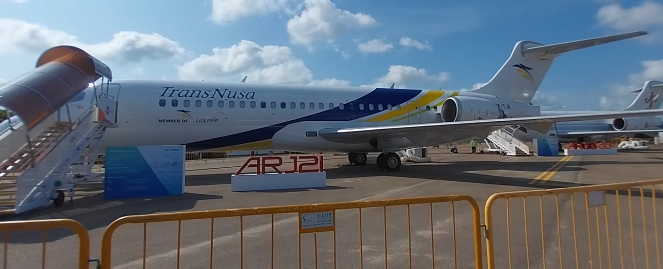
Image: TransNusa C909 (formerly the ARJ-21) at the Singapore Airshow 2024
For COMAC, Indonesia became the venue of a major breakthrough for its aircraft beyond China’s borders when TransNusa took delivery of its first C909 through lease in late 2022. Since then, TransNusa has grown its C909 operations to 5 aircraft used mostly on domestic routes to/from Denpasar (Bali), Lombok, and Manado. In addition to the domestic routes, TransNusa has expanded the operations of the C909 for flights connecting Indonesia and China. Major Indonesia-China routes that see the use of the China-made regional jets include services from Manado to Shenzhen, Guangzhou, and Shanghai Pudong.
TransNusa is currently the largest operator of COMAC aircraft, specifically the C909 outside Mainland China.
Laos
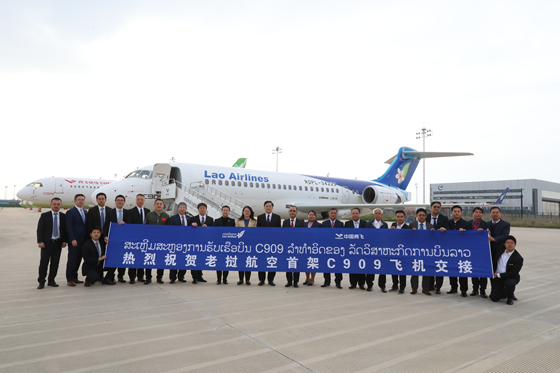
Image: Los Airlines' first C909. Credit: COMAC
Laos Airlines became the second operator the C909 following Indonesia’s TransNusa when it took delivery of its first leased aircraft in March 2025. Primarily used on domestic flights, Laos Airlines later operated its first international flight using the China-made aircraft on a flight between Vientiane and Bangkok Suvarnabumi in September 2025. Based on data from Flightradar24, the airline has expanded international routes using the aircraft to serve Da Nang and Nanning.
Vietnam
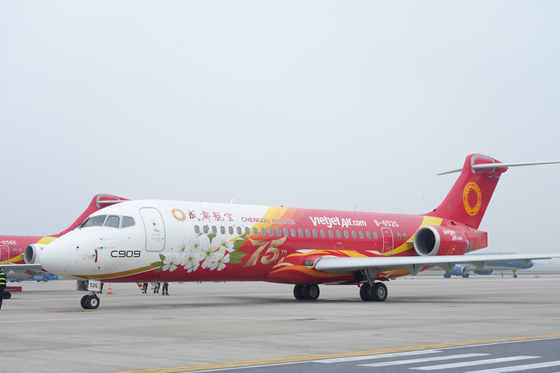
Image: Vietjet's first C909. Credit: COMAC
Following TransNusa, Vietnamese budget airline Vietjet took on two C909s through lease from Chengdu Airlines in 2025. The aircraft would be used to operate flights to/from the island of Con Dao off the coast of Southern Vietnam. With an 1830m runway, the C909 enabled Vietjet to operate flights to the small airport which previously was never served by jet aircraft.
Vietjet further boosted its commitment for the C909 with the signing of an agreement with SPDB Financial Leasing (SPDBFL) in April 2026 for the finance lease of 10 C909s. These additional C909s are also expected to help the airline gradually introduce more flights between Vietnam and China.
Cambodia
The operations of the leased C909s in Southeast Asia have became selling points for COMAC, though the company is starting to get interest for firm orders from airlines in the region. There have been reports from around the internet of interest from major airline companies, but so far Air Cambodia’s order for 20 C909s remains the first and only confirmed major bulk order for COMAC aircraft outside of China. The airline previously signed a Memorandum of Understanding (MoU) with COMAC for the aircraft order in September 2025. The agreement for the order was signed recently in July 2026.
Air Cambodia’s order for 20 C909 includes 10 firm orders and 10 options. The Khmer Times reported the first batch of the order is scheduled to be delivered to the airline and enter service during the second half of this year. Currently with a fleet of 6 aircraft (3 ATR-72s and 3 A320/A321s), the new C909s are expected to play a big role in the airline’s future fleet along with its orders for the Boeing 737 MAX.
Still a Long Path Beyond China
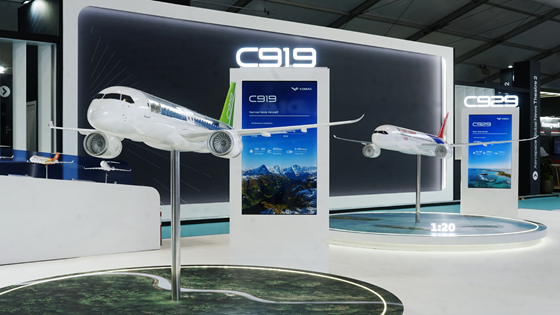
Image: COMAC product display at the Farnborough Airshow 2026. Credit: COMAC
While the C909 is gaining more interest in Southeast Asia, the larger C919 – seen as China’s challenger to the popular Boeing 737 and Airbus A320 families of aircraft – is expected to make its international debut in August 2026. As of the publishing of this article Air China is expected to launch the first international route using the C919 on August 12 on one of its daily round-trip flights between Beijing Capital Airport and Ulaanbaatar, Mongolia.
Leading up to this milestone for the C919, the nearly 30 active C919s have been used by the major Chinese airlines Air China, China Southern, and China Eastern on busy domestic routes. The C919 has also been used on flights to Hong Kong from Beijing and Shanghai. While Hong Kong is a Special Administrative Region of China, it is not considered a part of Mainland China. So the service to Ulaanbaatar is a key step in the long path for COMAC and its aircraft when it comes to its credibility in the eyes of the global aviation industry.
COMAC still facing its own challenges with aircraft production when it comes to getting certifications at key markets, supply chain issues, and production delays. Geopolitics have also affected China’s commercial aircraft manufacturer, especially when dealing with the much needed and coveted certification process for the C919s from the European Union Aviation Safety Agency (EASA) and the US Federal Aviation Administration (FAA). The prospects of getting the aircraft certified in the US and Europe is taking its time, much to the frustration of COMAC. In the meantime, COMAC could be going from country to country starting in Southeast Asia to expand the use of the China-made aircraft.
The future commercial success or failure of the C919 is still being discussed, though with the few airlines in Southeast Asia there are more opportunities for aviation enthusiasts to try flying aboard a Chinese-made commercial aircraft outside of China. Every COMAC aircraft operating outside of China is an opportunity for the company to prove the C909 and the C919 on the international stage.