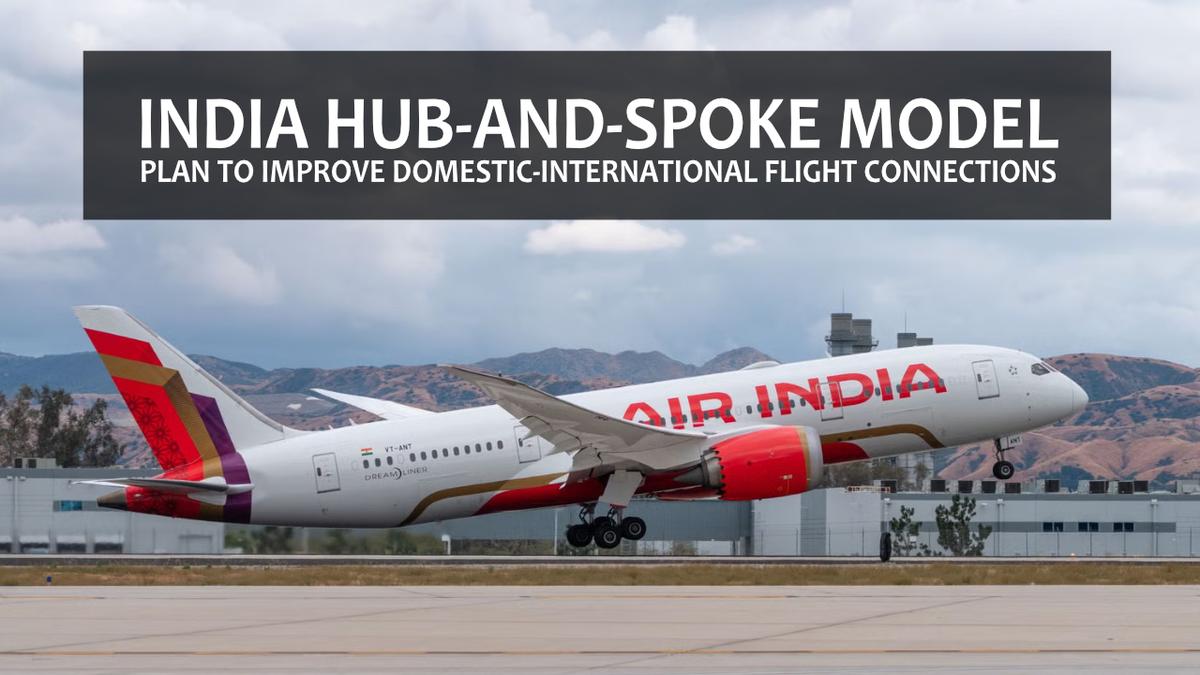
The Indian government announced a new Hub-and-Spoke SOP to improve the experience for Indians traveling outside the country at four hubs in India.
According to India’s Ministry of Tourism, nearly 33 million (32.7 million) Indians took an outbound trip in 2025. It represents an increase of 5.89% compared to the year prior, and an even bigger 14.75% increase compared to before the COVID-19 pandemic in 2019. As outbound travel has grown from India, more Indians are opting to transit to their final destinations via a foreign hub such as Dubai, Doha, and Singapore. Looking to reverse this trend, the Indian government is seeking to improve the process to make connections between domestic flights within India and international flights departing from four hubs: Delhi, Mumbai, Bengaluru, and Hyderabad. To do so, a new Hub-and-Spoke Standard Operating Procedure (SOP) has been announced for domestic-to-international transfers at the four hubs aims to capture Indian outbound passenger traffic who would make a connection abroad.
More Connections at Home
Indian outbound passenger traffic has become a feeder for foreign airlines and their hubs, with more foreign airlines operating at secondary hubs in India. According to India’s aviation minister Ram Mohan Naidu around 35% of international passengers traveling from the country transited through foreign hubs. Naidu identified three hubs that benefit from Indian transit passenger traffic in particular: Dubai, London, and Singapore. While seeking to reverse the trend of Indians transiting abroad, Naidu and the Indian government is working to make connecting onto international flights within India a more competitive and convenient option.
At present, those arriving from an international flight with a domestic connection at an Indian hub will first have to claim their baggage at the arrival airport and clear customs. Then, the passenger will have to check-in for their domestic flight. Those making a connection from a domestic to international flight will be able check-in through if both flights are on the same airline or an alliance partner. This applies to Air India flights and connections onto flights operated by Star Alliance partners such as Singapore Airlines, Lufthansa, Air Canada, and United.
Under the new Hub-and-Spoke SOP for domestic-to-international connections, transfer traffic will be consolidated at four major hubs. Classified as an international flight, two separate boarding passes will be given and marked D for Domestic and I for International. Customs and immigration procedures will be done at the initial point of departure, and passengers will be on specific flights at international zones separated from domestic passengers.
For international-to-domestic connections, the customs and immigration procedures will be done at the arrival airport in the country. Checked bags will be transferred without the passenger being required to claim them at the initial point of arrival. Instead the bags will be claimed at the final destination in India.
The flights operated under the hub and spoke system will only have international passengers, so separate aircraft will be used for domestic and international segments.
Supporting the initiative is Air India, which announced that the city of Varanasi will be first to be connected under the new Hub-And-Spoke model.
While the four Indian hubs of Delhi, Mumbai, Bengaluru, and Hyderabad are the initial hubs of the system, Naidu identified other hubs that are to be developed to grow the program such as Kolkata and Chennai. According to Naidu and the Indian government, the Hub-and-Spoke system will help airlines optimize aircraft utilization and decentralize passenger processes such as customs and immigration.
To Fly Air India or Emirates?
The goal of India’s new Hub-and-Spoke system is to develop the country as a transit hub for Indians traveling abroad. Many from India’s secondary and smaller cities with flights to the main hubs can benefit from the connections when traveling beyond the country. Though so far only Air India has given its support to the program and implementing it. It could be said that with the presence of major airlines operating at India’s secondary cities and their hubs, it can be a tough sell to Indians considering the many options now available when going overseas.
One can simply look at the networks of major foreign airlines operating within India, offering convenient departing options and attractive transit hub experiences outside of the country. Among the Gulf carriers, Qatar Airways operates flights to 13 cities in India, Etihad with 11, and Emirates with 9. Southeast Asia-based carriers such as Singapore Airlines operates flights to 8 cities in the country and Malaysia Airlines has recently expanded its network in India to 10 cities. Indians on social media have often compared the in-flight services and amenities on these non-Indian carriers and mostly see them superior compared to what is offered on Air India.
Air India stands to gain the most from this Indian government initiative, as it continues to work to improve its own services and expand its international network. Though the airline and the air hubs such as Delhi and Mumbai need to ensure the transit experience is comfortable and easy for the transit passengers. While it may not be as memorable as transiting through airports such as Singapore’s Changi Airport or Doha Hamad, it is a worthy initiative to connect many smaller cities in India to the rest of the world.